What happens to the people we call heroes after they come home?
That question sits at the center of The Veteran, an independent feature film written, directed, produced, and filmed by New York filmmaker Wilfred La Salle through La Salle Productions Inc. The film follows a military veteran who has become homeless while struggling with PTSD, addiction, and the realities of trying to survive after returning to civilian life.
But The Veteran is more than a story about one man. It is a film about the systems, circumstances, and human failures that can leave people behind—and about the responsibility of a society that celebrates its veterans while they serve but can struggle to support them when they return home.
For La Salle, telling that story meant bringing it directly into the streets of New York.
The film was shot extensively throughout Brooklyn and New York City, using locations including Canarsie, Bushwick, Crown Heights, Times Square, Grand Central, and other recognizable parts of the city. Rather than creating a fictionalized version of New York on a soundstage, La Salle used the city itself as part of the story.
The result is a film grounded in the environment of the people and communities it depicts.
A Veteran’s Story Told Through New York
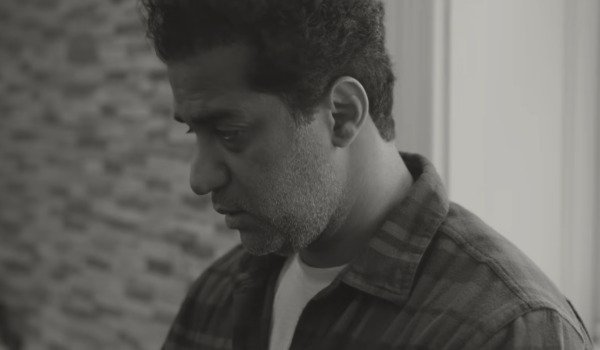
At the heart of The Veteran is Yanko Valentin-Perez, who portrays the film’s central veteran character.
His character represents someone whose military service is only one part of his story. After returning home, he faces struggles that extend far beyond the battlefield. PTSD, addiction, homelessness, and isolation begin to reshape his life.
The film examines the difficult intersection of those issues without reducing the character to a statistic.
New York becomes an important part of that examination.
From Brooklyn streets to major Manhattan landmarks, the locations provide a contrast between the city’s energy and the isolation experienced by someone living on its margins. Thousands of people can pass by someone in need without knowing anything about the circumstances that brought that person there.
That contrast became one of the film’s central visual ideas.
The city is constantly moving. The veteran is trying to survive within it.
Making the Film Outside Hollywood
The story behind The Veteran is also part of the story.
La Salle has spent more than eight years building La Salle Productions independently, creating a growing slate of feature films without the traditional studio infrastructure. There was no major Hollywood production machine behind The Veteran, no large studio system determining the story, and no traditional path guaranteeing that the film would reach an audience.
Instead, La Salle handled multiple aspects of the production himself, including directing, screenwriting, producing, and cinematography.
That independence has allowed him to pursue stories centered on social issues that he believes deserve to be seen.
His films have explored subjects including veterans, homelessness, addiction, autism, mental health, and social inequality. Rather than waiting for the traditional industry system to provide an opportunity, La Salle has continued creating his own.
The Veteran became another step in that ongoing process.
The production required assembling a cast and crew, securing locations, managing the logistics of shooting throughout New York City, and completing the film while operating independently.
The goal was not to make an independent film that looked limited by its resources.
The goal was to make a film that could stand on its own.
The Issues Behind the Story
The Veteran confronts several issues that frequently overlap in the lives of vulnerable veterans.
PTSD and mental health are central to the story, but the film also explores addiction, homelessness, the opioid crisis, and questions surrounding access to healthcare and support services.
These issues do not exist in isolation.
A person struggling with trauma may also struggle with substance abuse. Addiction can contribute to homelessness. Homelessness can make treatment more difficult to access. Isolation can make already serious problems worse.
The film uses one veteran’s experience to explore those connections.
It also asks audiences to consider a broader question: what happens when the public recognition associated with military service disappears and a veteran is left to navigate civilian life alone?
That question gives the film its social dimension.
Brooklyn as More Than a Location
For La Salle, filming in Brooklyn was not simply a matter of finding visually interesting locations.
Brooklyn helped establish the world of the film.
Bushwick, Canarsie, and Crown Heights each bring their own visual identity and history to the screen. The neighborhoods are not treated as generic backdrops. They help establish the environment in which the characters live and move.
The film’s use of recognizable New York locations also reinforces the idea that these issues are not happening somewhere far away.
They are happening in American cities, including New York.
A story about homelessness and veterans can sometimes feel abstract when discussed only through statistics. Putting those issues into recognizable streets and neighborhoods makes them immediate.
The audience can see the places.
They can recognize the city.
And they can recognize the possibility that the person being ignored on a sidewalk has a story that they know nothing about.
From Independent Production to FOX Soul
After completing the film independently, La Salle’s next challenge was finding a path to an audience.
The Veteran has now reached another significant milestone with an official two-year distribution deal with FOX Soul. The film is also available through additional streaming platforms, expanding its potential audience beyond the independent film circuit.
The distribution agreement represents an important moment for a filmmaker who has spent years building a production company independently.
It also changes the conversation around the film.
What began as an independently produced New York feature about a forgotten veteran has now moved into a larger distribution environment where its themes can reach audiences beyond the communities in which it was filmed.
The film has also received attention from media outlets including Bushwick Daily, Brooklyn Paper, Brooklyn Eagle, BK Reader, Canarsie Courier, and amNewYork, among others.
That coverage has helped bring attention not only to The Veteran, but also to the independent production process behind it.
Why This Story Matters
There is a larger conversation taking place around The Veteran one that extends beyond filmmaking.
Independent filmmakers are often told to wait for an opportunity.
La Salle’s approach has been different.
He has continued producing films, building his own company and creating opportunities rather than waiting for the traditional system to create them for him.
The Veteran reflects that philosophy both behind and in front of the camera.
The film is about a veteran who has been left behind, but it is also about the people who refuse to stop moving forward.
Its production demonstrates what can happen when a filmmaker uses limited resources, familiar locations, and an independent infrastructure to tell a story that he believes deserves to exist.
For La Salle, the film is ultimately about empathy.
It asks audiences to look beyond the circumstances they see on the surface and consider the experiences that may have come before them.
A homeless veteran is not simply a person on a street corner.
A person struggling with addiction is not simply an addict.
A person suffering from PTSD is not defined entirely by their trauma.
There is a human story behind each of those circumstances.
The Veteran attempts to bring that story into focus.
And by placing that story against the streets of Brooklyn and New York City, La Salle has created a film that is unmistakably connected to the city in which it was made.
The film’s journey—from an independently produced New York project to a film with a two-year FOX Soul distribution deal—also reflects a broader evolution in independent filmmaking.
You do not always need a Hollywood studio to tell a story.
Sometimes you need a camera, a city, a cast, a commitment to the subject—and the determination to keep going when there is no traditional system waiting to open the door.
For La Salle, The Veteran is another chapter in that journey.
And the question at the center of the film remains one worth asking:
When the applause fades and the uniform comes off, who is still there for the heroes who came home?