


Hong Sang-soo delivers again and again. His filmography already boasts more than 30 feature films, with two more added this year alone. Having attended the Berlinale for seven consecutive years, Hong continues to stand as one of the most authentic voices in contemporary cinema, having developed an artistic method he will never betray. The true auteur and maestro did not disappoint this year either: his two new feature films, The Day She Returns and Nowhere to Lay My Eyes, premiering at the Berlinale and Locarno, respectively, are among the best films of this monstrously great year for cinema. They are further proof that cinema continues to live through Hong.
Hong Sang-soo’s The Day She Returns and Nowhere to Lay My Eyes—Review
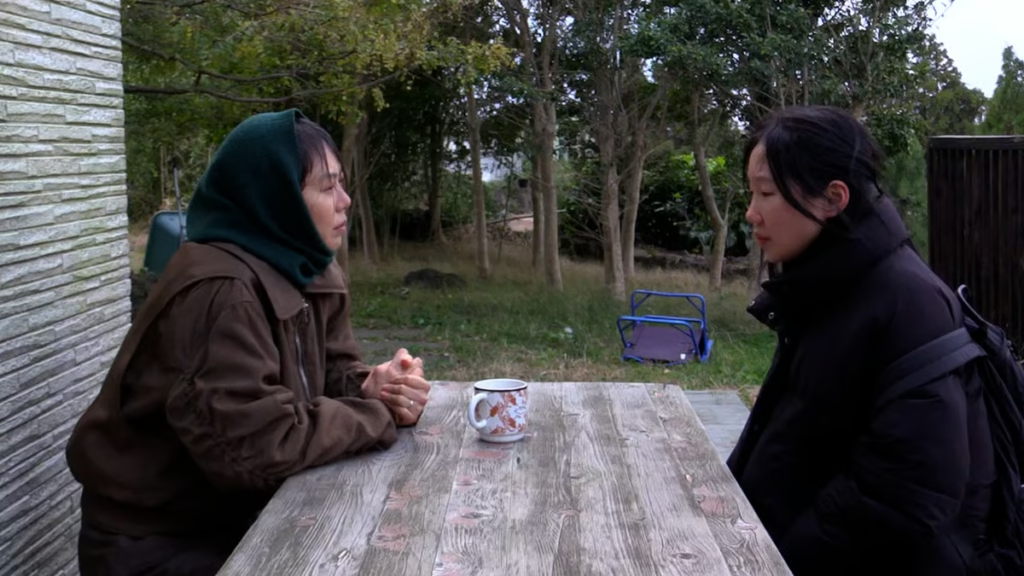
The Day She Returns follows a day in the life of a famous actress who has evidently taken a long break from acting following the breakdown of her marriage and the experience of motherhood and has finally returned to the screen in a smaller independent film. This leads to three interviews, in which the interviewers, all young women who look alike, ask almost identical questions. Jeongsu, played by Song Seon-mi, is rather uncomfortable with these questions, as they mostly concern her private life. However, little by little, interview by interview, she begins to open up about her personal life, even offering dating advice to one of the interviewers. Hong ironically touches upon this very theme: being asked similar questions himself, he has his protagonist ask whether the interviewers wouldn’t rather share a beer with her. And although the questions seem almost identical, all three interviewers are somewhat distinctive. If this is what interviews with the famously alcohol-loving Hong look like, I can only imagine how few people would turn down such an irresistible offer to share a beer with him. Later, Jeongsu attends an acting class, where she reenacts those interviews, almost blending them into a single conversation, during which she becomes even more sincere and open about herself.
The simple, manneristic reflections of Hong on situations that are familiar to everyone, yet nonetheless a tiny bit strange and discomforting, virtually about anything, are what make his cinema so sublime, almost entirely free of redundancies (though looking for the Sublime in Hong’s films is like chasing a car—even if it is there, it is most definitely out of the viewer’s reach). Just an actor delivering their lines, shot on a camera that is far from the best quality; an almost mystical or deceptive simplicity of his artistic method is just as clearly present in his second film of the year, where the repetitiveness of the first film can still be felt, though it is more concealed and less radical.
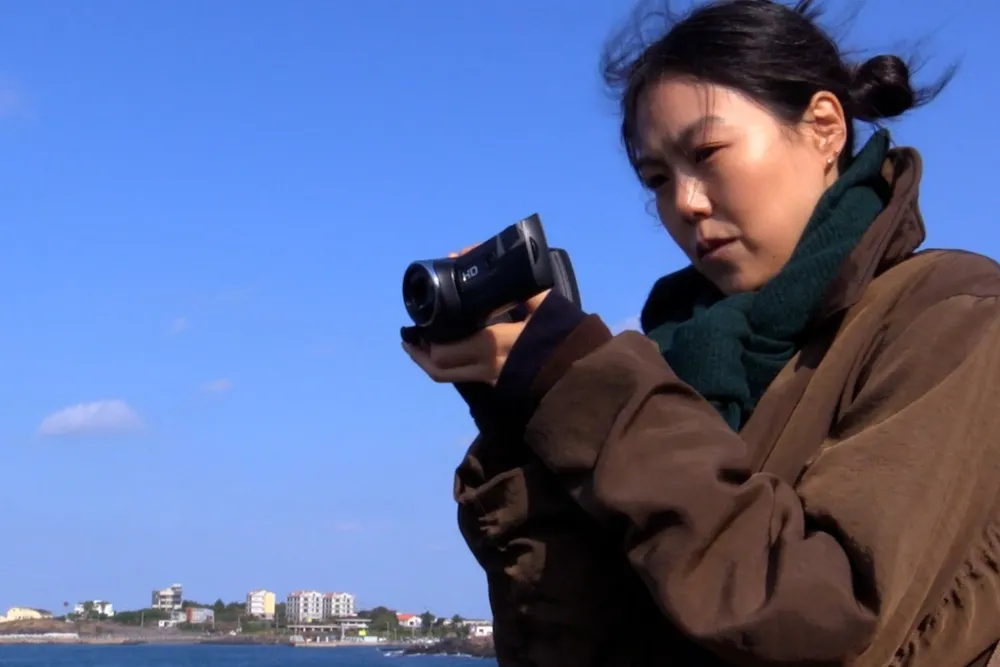
Nowhere to Lay My Eyes follows a sister and her brother as they visit their mother, who is, if not happily, then certainly joyfully married to her husband, whose daughter from a previous marriage lives with them. Joyfully eating shrimp, enjoying some soju, wandering through the beautiful Korean countryside while reflecting on the nature of things—free from all possible redundancies, Hong Sang-soo is the epitome of cinema. Over the course of a few days, the daughter, a director of experimental films (probably another joke from Hong, whose own cinema is often considered experimental, even though his approach has hardly changed over the years), talks about almost everything while filming various sights she finds beautiful with her small, rather crappy video camera.
Her family even watches one of her short films, which consists of a low-quality video of a flower with some reflections in the background. Another joke from Hong, who himself has made a similar short film about a flower. The little weekend getaway comes to an end with the mother asking her daughter to consider moving in with her, where they have enough space and she could keep making films, since the scenery on the island they live on is quite beautiful. Making one last stroll through the island, the brother grows worried that they will be late for the plane but eventually manages to find his sister, and thus the film comes to an end.
Reflections, however, are not as important as the very act of filmmaking. Hong Sang-soo’s references to the Israeli-Palestinian conflict or the debate surrounding AI are of little significance to him—more of a gesture, showing that he is aware of the problems of today’s world, though he probably couldn’t care less (though he is definitely not indifferent) as long as he has his camera in his coat pocket, with which he still manages to capture the almighty beauty of this world. Despite the film’s title, Hong still has places to lay his eyes. His precision is indescribable. Methodologically embracing the world around him and manneristically incorporating shots of people drinking, whether beer or soju, he creates his own low-key form of cinema, one that achieves authenticity through constant reproduction. Perhaps that is precisely what Hong once called “true interest.”