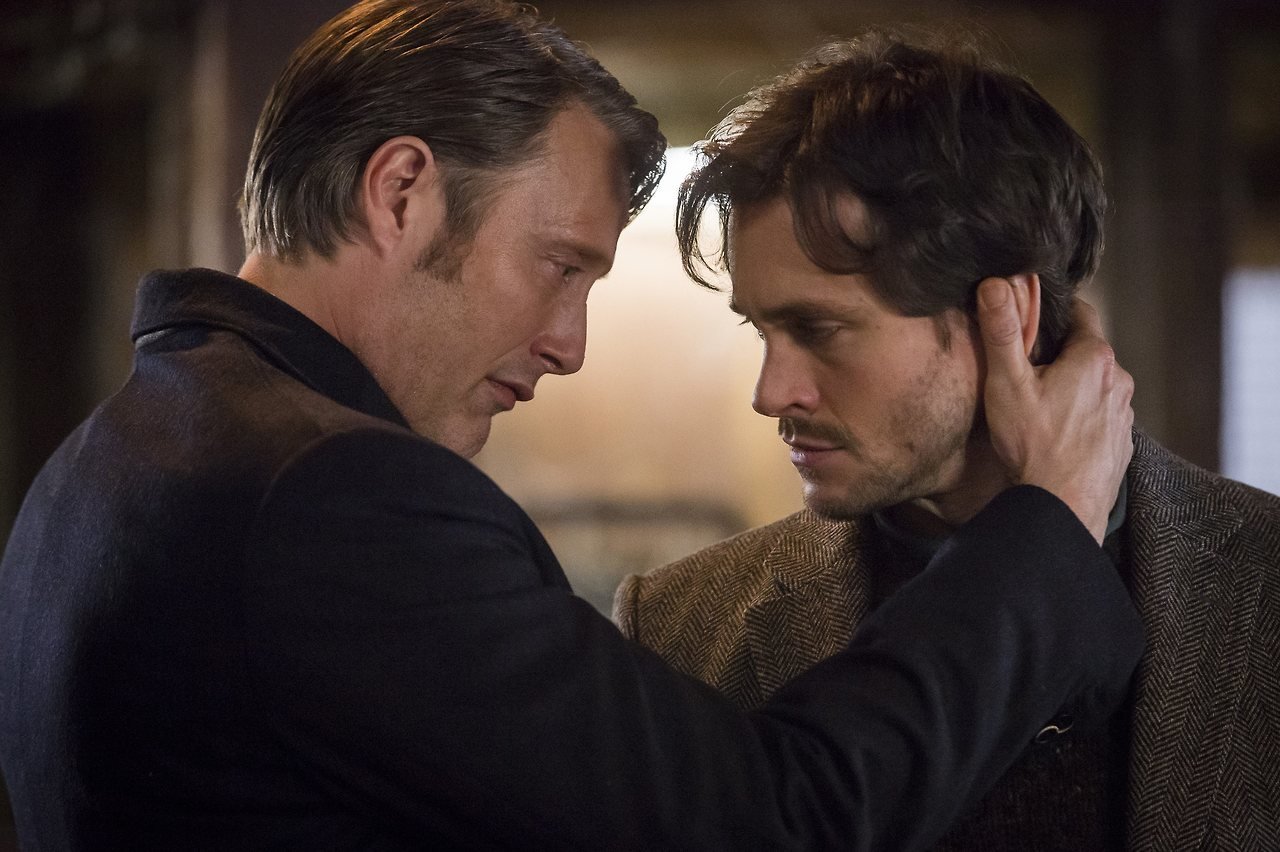
Why do we trust certain characters before they even start talking? Why do we think some are villains, while others seem like geniuses? The images of characters in films do not simply reflect the character. They allow the audience’s perception of a character to be “constructed” through colors, silhouettes, and shapes, both in clothing and accessories. A character’s clothes, hairstyle, and hair color tell us not only about their emotional state or status but can also influence our impression of them.
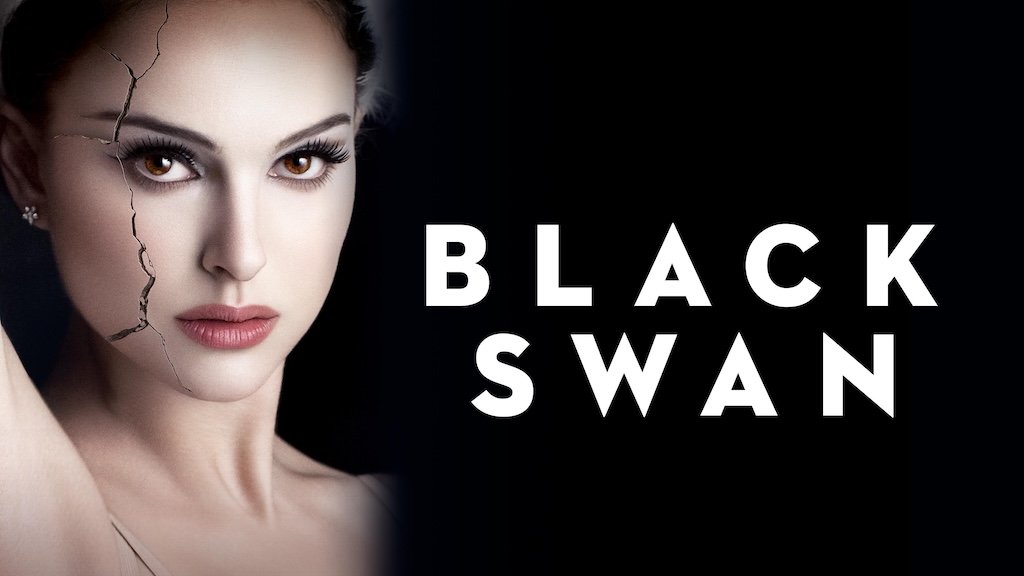
Black Swan: Transformation
Black Swan is a psychological thriller by Darren Aronofsky about a ballerina, Nina Sayers, who gets the lead role in a production of Swan Lake. She has to perform both the innocent White Swan and the daring Black Swan, and gradually, her desire to embody both roles perfectly begins to change her.
We understand that Nina is a kind and sweet girl, not only from her patient character and gentle manner of communication. Something catches the eye before she even speaks. Pink walls in her room, a flower-patterned blanket, and the color palette of her wardrobe—pastel colors: pink, white, and grey. A white tutu and leotard. A pink scarf and flower hair clips. Nina is the embodiment of grace and tenderness. Her skin literally blends into these pastel walls, and the heroine looks more like a porcelain doll. This is where the main trap of her image lies. The director deliberately creates the image of the perfect “White Swan” only to destroy it later. This was not accidental. Costume designer Amy Westcott explained that the film’s palette was deliberately connected to Nina’s development: “We used the palette to show the evolution of Nina’s character.” We remember this pink world not as a cozy place, but as a cage in which Nina is suffocating even before her rival Lily arrives. She just does not realize it yet.
Her transformation does not begin with turning into the “Black Swan,” but with the gradual destruction of the “White Swan.” Flower hair clips turn into a strict, slicked-back bun. A black coat replaces the familiar pink one. During training, her leggings are no longer grey but black. We can see how her delicate wardrobe gradually becomes darker and stricter, and she herself increasingly resembles the Black Swan.
Nina’s transformation is complemented by her behavior and her surroundings. Her mother stops fastening the buttons on her back and cutting her nails. The stuffed animals disappear from her room, and the music box cracks. All of this together reflects Nina’s inner state and the gradual destruction of her mental state. The climax comes when Nina stops simply associating herself with something dark. She becomes it. White feathers turning black literally grow into her. The black corset is tightened to the point of breaking, and on her back there is no longer an accessory but a scratch.
By the end, clothing no longer simply reflects Nina’s inner state—the boundary between the costume and the heroine disappears. That is why we notice her transformation long before we are directly told about it and even before she realizes it herself.
Hannibal
Bryan Fuller’s Hannibal tells the story of the complicated relationship between gifted FBI profiler Will Graham and psychiatrist Hannibal Lecter, who secretly turns out to be a serial killer and cannibal.
From the first seconds we see Hannibal Lecter, he appears to be an aristocratic and aesthetic person. Refined taste, restraint, and strictness. This is communicated not only through his behavior, his few words, and his interior. His appearance is immediately read as a marker of status: jackets, trousers with perfectly pressed creases, ties, and watches create the image of an aristocrat accustomed to being in a privileged environment.
Hannibal does not dress like someone we are supposed to be afraid of. He dresses like someone we can trust. This was part of the character’s deliberate visual construction. Bryan Fuller explained that “it was very important to me that the show be as stylish as the title character.” He wanted Hannibal’s three-piece suits to be refined enough for him to “move amongst us.” Sharp lines of his jackets, shoes polished to a shine, even a special chef’s uniform when he cooks. Hannibal carefully controls not only his actions but also how the people around him, his friends and patients, see him. The interior of his home is a reflection of his appearance. Dark shades, books neatly arranged on shelves, works of art, everything in its place.
His wardrobe becomes another tool of manipulation, only visual, not directly over other people, but over how they perceive him. The strict cut of his suits symbolizes control. Neatness and restraint—discipline. Different ties and waistcoats—status and background. The chef’s uniform makes him look like a professional chef, although in reality he gives cooking a completely different meaning. For him, cooking is another way to turn cruelty into aesthetics and a highly controlled process—weight, temperature, time—everything is under his control. Even something connected to violence looks flawless in his execution.
However, absolutely nothing in his appearance says anything about his cruelty, which he skillfully hides behind a perfectly pressed collar and a jacket that fits him perfectly. The strength of Hannibal’s appearance is not that it reflects the character’s inner world, but rather that his clothes help him hide it. Unlike Nina in Black Swan, where clothing shows her inner transformation, in Hannibal, appearance, on the contrary, helps the character hide his identity and true intentions. We see what he wants us to see.
The Dropout
For context: The Dropout is a series based on real events that tells the story of the rise and fall of Elizabeth Holmes and her biotechnology company, Theranos.
You have probably heard the phrase “Fake it till you make it.” Elizabeth Holmes took it too literally. She dreamed of looking not like a cute girl with a business but like a serious leader in the field of biotechnology. At first, while studying at university and starting her discoveries, Elizabeth dresses simply and casually, letting us understand that she is completely focused on work. T-shirts, messy buns, sweatpants, vests, and leggings—this is what her wardrobe consists of.
But as success gets closer, her style changes too. Costume designer Claire Parkinson recalled using the black turtleneck during Amanda Seyfried’s first fitting “so she could feel like she knew who the character was becoming.” Trying more and more to resemble her main idol, Steve Jobs, the heroine’s style becomes increasingly strict and formal. Red lipstick, pulled-back hair, a fitted black suit, sharp heels, and the main detail—a black turtleneck.
Even before Elizabeth had finally reached agreements with investors and before she had even launched the product, she started dressing as if she already owned a multi-billion-dollar corporation. Through clothing and appearance, the heroine creates and assembles her image. Her appearance becomes part of building the person she wants to seem like. After all, in her dreams, this is exactly how she sees herself—serious and formal.
In Black Swan, clothing is transformation; in Hannibal, it is the concealment of true nature, armor. In The Dropout, however, appearance is a kind of “manifestation,” the construction of the image of a great person before you have even become one.
The Final Stitch
Of course, perception of a character is influenced by more than just clothing. Music, interior, dialogue, lighting, acting, and the atmosphere of the scene itself all play an important role. But appearance is what catches the eye first. It starts working before the character has time to say anything or even behave in a certain way. We may not understand why some characters seem mysterious, someone else successful, and another one a failure, but their appearance has already given us clues.
First impressions are formed within seconds. That is why films have costume designers, or even entire teams of designers, to convey a character’s message through clothing as accurately as possible. And that message is always different. It can be the construction of a new identity (The Dropout), a mask hiding the true self (Hannibal), or the beginning of an inner transformation (Black Swan).