Dwindling Influence and the Upcoming Power Shift
Across the United States, observers and analysts agree that Donald Trump’s political leverage in Washington is facing severe pressure. This decline in executive momentum can be attributed to several factors inherent to American politics, most notably the impending November 3, 2026, midterm elections. Midterm elections traditionally serve as a referendum on the sitting administration, functioning as a mid-course evaluation of the president’s performance during their four-year term. Similar parliamentary and legislative mechanics occur globally, where incumbent governing parties frequently become the political scapegoat for persistent socioeconomic grievances.
Pressures on Republican Control Ahead of the 2026 Midterms
Historically, incumbent governments across democratic societies struggle to fulfill every ambitious promise declared at the launch of their mandates. President Donald Trump remains a quintessential example of this phenomenon, having delivered bold campaign commitments that frequently clashed with political realities and unexpected economic hurdles. When policies stall, administrative setbacks are often framed as unforeseen external challenges, leaving the average voter to navigate mixed messages from party leadership.
The stakes for the upcoming election cycle could not be higher. On November 3, 2026, voters will decide the composition of the 120th United States Congress. All 435 seats in the House of Representatives are up for election, alongside 35 of the 100 United States Senate seats. Concurrently, dozens of state governorships, judicial appointments, and state legislative seats across the nation will be contested. This vast electoral reshuffling poses a direct challenge to the ruling party’s legislative agenda.
Market Uncertainty and Economic Impact Surrounding Midterm Forecasts
Global financial markets, along with volatile digital asset and cryptocurrency sectors, are closely monitoring these electoral developments. The primary concern for investors and international institutions is whether President Trump can maintain a unified Republican majority in Congress, or whether his administration will face a divided government with a Democratic majority controlling at least one congressional chamber starting in January 2027.
A split Congress dramatically shifts executive power, limiting a president’s ability to pass domestic legislation, confirm judicial nominations, or enact tax and trade proposals. As of mid-September 2026, current polling data and electoral prognoses indicate a challenging landscape for the administration, heightening volatility across financial markets as investors prepare for potential policy gridlock or aggressive congressional oversight.
The Constitutional Debate: Trump and the Third-Term Speculation
The political landscape has been further complicated by recurring discussions surrounding presidential term limits. Historically, Franklin D. Roosevelt remains the only American president to serve more than two terms, having won four consecutive presidential elections in 1932, 1936, 1940, and 1944. In doing so, Roosevelt broke the unwritten constitutional tradition established by George Washington, who stepped down after two terms to prevent the presidency from resembling a monarchy. Roosevelt’s extended tenure was largely tolerated by an American public navigating the severe hardships of the Great Depression and the existential threat of World War II. However, Roosevelt passed away in April 1945, shortly before the official end of WWII in Europe.
The Congressional Battleground: House and Senate 2026
To permanently prevent future presidents from exceeding two terms, the U.S. Congress passed the 22nd Amendment to the Constitution, which was officially ratified in 1951. The amendment explicitly mandates that no person shall be elected to the office of the President more than twice. Under this strict constitutional framework, any attempt by a president to seek a third term would require a formal constitutional amendment—a process requiring a two-thirds vote in both houses of Congress and ratification by three-fourths of U.S. states. Given the current hyper-partisan environment in the House of Representatives and the Senate, such a structural change remains virtually impossible.
Public Sentiment and Economic Promises for the Midterms
As the nation approaches election day, voter dissatisfaction with political rhetoric and economic pressure has grown pronounced. In response, campaign narratives have increasingly relied on grand direct-benefit proposals, including rumors and suggestions of direct voter stimulus payments or tax rebates aimed at easing consumer hardship. Observers note that such promises reflect a desperate attempt to retain voter loyalty ahead of a critical election, as losing majorities in either chamber would effectively dismantle the chief executive’s policy platform for the final two years of his term.
Geopolitical Shifts: NATO, Tariffs, and Global Stability
Regardless of how the remainder of Donald Trump’s presidential term unfolds, his tenure has undeniably altered the trajectory of modern geopolitical relations. Under his foreign policy framework, long-standing international alliances—most notably American support for European defense commitments and NATO—have undergone fundamental reconsiderations. Furthermore, the strategic implementation of aggressive import tariffs and altered trade agreements has restructured global supply chains and trade relationships.
These sudden policy pivots have generated significant uncertainty among international partners and international markets. As creatures of habit, international allies and financial systems depend heavily on predictability and institutional continuity. The ongoing shift toward transactional diplomacy leaves world leaders, trade partners, and citizens facing an increasingly unpredictable global environment as America prepares to cast its votes in November 2026.
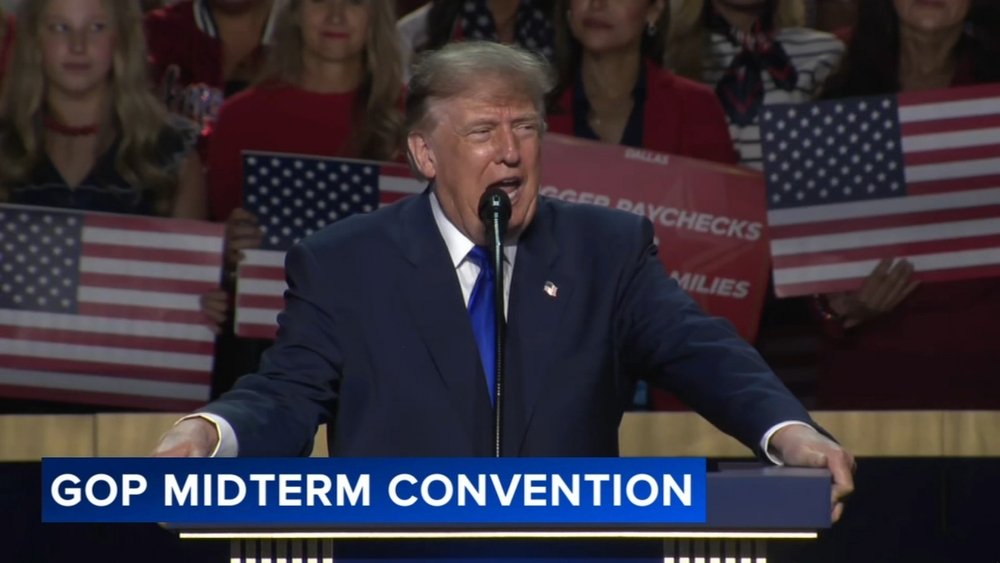
President Trump’s 2026 RNC Midterm Convention Speech
This video features President Donald Trump’s full address at the Republican National Committee midterm convention, directly addressing his administration’s economic record, tariffs, and key legislative strategies leading into the November 2026 midterm elections.