During the twelve-day Iran-Israel war of June 2025, news started surfacing in Iranian media and Farsi social media claiming that Iranian forces had captured two Israeli female pilots of F-35 jets. In all reports, it was “female pilots” being captured. This news was even officially broadcast on Iran’s official Radio and Television Network (IRIB), but it turned out to be just a rumour and was later denied by officials. Yet it was not simply another piece of wartime rumour or propaganda; it also generates an interesting picture in the mind: a female enemy, armed, a pilot, and finally captured.
It was not even an isolated event. Even before and during the war, some Iranian channels and pages on social media producing “funny” content used to post pictures of Israeli female soldiers mostly in a sexual manner and accompanied by sexual texts such as “we are waiting for you” or “come sooner.” In all these examples (from the capture of Israeli female pilots to the pictures of female Israeli soldiers), an enemy female representing the military force of the enemy country is shown in a rather sexualized way: we have either “already captured” these females, or we “will capture” them once they come. So why should a female representing the military power of the enemy in political narratives come to be pictured in media fantasy as a sexualized object to be captured? And why did such an image—in various forms—start circulating among Iranians during the war?
What kind of collective fantasy makes such a story imaginable? Why “capturing a female enemy”? Why “a female pilot”? And why do these rumours appear at the same time as the sexualization of female enemy soldiers on social media? What makes this picture relatable for an anxious subject feeling threatened and powerless in a wartime situation? Is it possible that such narratives express a particular form of fantasy in which the position of the subject is suddenly reversed from “the attacked” to “the attacker”?
A war is not merely an external military event; for the civilian population, war is also an intense experience of threat, vulnerability, loss of control, and being attacked. Given the aerial supremacy of Israel (exemplified by F-35s) in the 2025 war, this experience of vulnerability and helplessness was intensified for many Iranians. For many civilians, the experience of being repeatedly exposed to Israeli airpower could produce a sense of vulnerability and asymmetry: the enemy could strike from above, while the source of that power remained largely distant and inaccessible. This helplessness places particular pressure on fantasy, which is invoked to help the subject survive the situation; the mind can thus imagine what reality does not allow. In other words, while the reality is “I am under the control of the other,” the fantasy can say, “I have the control.”
Reading the imaginary picture of the Israeli pilot being captured, this contrast becomes clear: while in reality a subject experiencing the war from within Iran feels attacked, vulnerable, and potentially helpless, in fantasy that same subject captures, controls, and possesses. Fantasy, in this sense, does not necessarily negate reality; rather, it changes the position of the subject.
But why must a female enemy pilot be invoked to play a part in this fantasy of reversal? If it were simply a fantasy of military victory, the military position and sexuality of the pilot would not necessarily matter. Yet in this narrative a well-armed and powerful enemy takes the shape of a helpless woman who is captured (and is also an object of sexualized attention).
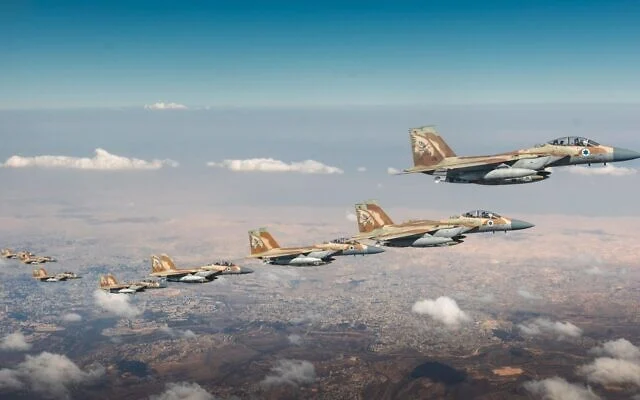
In this war, for many Iranians who experienced the conflict through daily encounters with its impacts and through media reports surrounding it, the face of the Israeli army was not infantry units, tanks, or even a particular figure, but F-35s. Aerial attacks on major cities were an important part of the campaign, and F-35s were present in news, images, analyses, and narratives of the war. In this sense the F-35 became the face of the invasion, representing the invading army.
A fighter jet’s particular qualities also add to this: the fighter jet, as experienced by the Iranian subject, turns into something that invades their protected space and becomes an instrument of violence. A pilot guiding an F-35 could therefore easily become the personification of a distant aggressor. But if the pilot represents and personifies the aggressor army, why in the aforementioned rumours and fantasies are the pilots depicted as female? Here we can briefly look into the Iranian cultural background to understand the specific role that gender plays in this wartime fantasy.
In Iranian cultural and political language, the homeland has often been imagined through maternal and feminine figures, most explicitly in the familiar notion of the “motherland.” Consequently, any attack on the homeland is usually depicted and described through the language of invasion—but with sexual implications of the word. The Persian word تجاوز (tajāvoz), commonly used in political discourse to describe an attack or violation, also carries the meaning of sexual assault or rape. This semantic overlap allows national invasion and sexual violation to occupy the same symbolic register. Therefore, the metaphorical language of the conflict from the Iranian side has already made sexualized thinking possible.
So far, then, we have Iran as a feminized homeland within a longstanding symbolic repertoire in Iranian political and cultural discourse; Israel as the attacking force; and the F-35 as the embodiment of that attacking force. Now the fantasy of the anxious and helpless subject, by reversing roles, places the pilot of the F-35 as the feminine body who is captured and thus “invaded” or “can be invaded” by the Iranian aggressor.
We can understand this collective fantasy as an attempt to solve an internal conflict of anxiety: I am the one who is exposed and vulnerable to the other’s invasion. Fantasy then enters and reverses the roles, claiming that: I am the one who possesses/invades the other. In this fantasy, helplessness is reversed into mastery, while the position of vulnerability is symbolically transferred to a feminized enemy.
Finally, such rumours and media viral contents could perhaps be about a psychological need for reversal of roles. In a war situation a civilian subject might feel vulnerable, without control and helpless; yet an alleviating fantasy could relieve the subject by reversing the positions: the side being attacked in reality turns, in fantasy, into someone who controls and has mastery over the other.
This reversal does not come from nowhere. When the homeland is historically and culturally described in feminine terms and an attack on it is depicted with a word that also carries the meaning of rape, we can see how the war is already situated inside a sexualized symbolic language. Therefore when the fantasy reverses the roles, it is not strange that the female body of the enemy forces turns into the battlefield for this reversal: what used to be the threatening and invading body is now turned into a feminine, vulnerable body that can be captured, controlled and sexualized.
Perhaps, then, the importance of this rumour is not merely that it is false propaganda, but the kind of truth that this fantasy attempts to construct. The fantasy is unable to take down real F-35s from the sky or change the proportion of Iranian military power; yet it is able to change the relationship between the subject and the aggressor. The same aggressor who suddenly appeared in the sky and bombarded us is thus turned into a human, a female, a captive, and is in the possession of the subject. A rumour, in this light, might be less about what happens on the battlefield and more about what the anxious subject desires to take place in the field of fantasy.