


A Critical Reflection of The Rings of Power on the Seduction of Spectacle, the Nature of Evil, and the Forgotten Power of the Human Spirit
Perhaps my most fundamental criticism of The Lord of the Rings: The Rings of Power begins with its title. After considering the overwhelming presence of sinister creatures, supernatural forces, deception, and the struggle for domination, I find myself asking whether a more revealing title would have been The Lord of the Devil’s Rings.
The Lord of the Rings (The Rings of Power)—or the Lord of the Devil’s Rings?
This is not simply a provocative play on words. It reflects my interpretation of the spiritual and philosophical atmosphere that dominates the series. The rings represent more than instruments of extraordinary power. They become symbols of temptation, manipulation, and the desire to control the destiny of others.
The series offers an immense fictional universe populated by elves, orcs, dwarves, and other extraordinary beings. Its visual ambition is undeniable. Yet beneath that spectacle, I find an increasingly troubling question: Where is humanity in this universe of overwhelming supernatural power? And more importantly, what does this world ultimately teach us about the nature of existence?
The Human Being: Between Good and Evil
Every human being possesses the potential for both goodness and evil. One person becomes a murderer. Another becomes a physician who dedicates a lifetime to saving lives. Another chooses generosity, compassion, and service to humanity.
These differences are not determined by magical rings or monstrous appearances. They emerge from conscience, character, moral choices, and the circumstances in which people live. This is precisely why I believe human existence offers a far more profound dramatic foundation than the endless multiplication of supernatural creatures.
I do not reject the possibility of realities beyond our visible world. My personal belief is that the human imagination may reach toward dimensions of existence that remain beyond our present understanding. But belief in the unseen should never become an excuse to diminish the visible dignity of humanity.
The true struggle between good and evil does not require a monster to make itself meaningful. That struggle already exists within the human condition. And sometimes, the most terrifying evil wears an entirely ordinary human face.
When Supernatural Creatures Take Control of the Narrative
One of my principal objections to The Rings of Power concerns the prominence given to supernatural beings and forces. The series is filled with creatures whose appearances and behavior, from my spiritual perspective, evoke demonic imagery, wandering spirits, and disturbing visions of the unseen.
Their presence is not necessarily a flaw in itself. Fantasy has always depended on the extraordinary. The problem arises when these beings and their powers become so dominant that the emotional and moral experiences of recognizable human life appear secondary.
Families, loyalties, relationships, and personal destinies are repeatedly drawn into conflicts governed by forces beyond ordinary human experience. The result, in my view, is a narrative that risks becoming more fascinated with supernatural domination than with the humanity caught within it.
I find a related concern in The Witcher, another fantasy production in which monsters, magic, and supernatural conflict play central roles. I am not suggesting that these fictional creatures are literally the same as the jinn or spirits described in religious traditions. Rather, their imagery invites such associations within my own philosophical and spiritual interpretation.
My objection is not to the existence of imaginary beings in storytelling. It is to the possibility that their overwhelming presence may reduce the human being to a secondary figure in a story supposedly concerned with destiny, morality, and power.
Creation, the Creator, and the Missing Spiritual Dimension
From my perspective, creation represents the greatness of God, the wisdom of the Creator, and an order of existence that extends beyond humanity’s limited understanding. Within my faith, even the angels possess a purpose and responsibility under divine authority.
The Rings of Power, however, presents a mythological universe in which supernatural powers, conflicts, and creatures occupy much of the visible narrative. To be fair, Tolkien’s original mythology does contain a supreme creator, Eru Ilúvatar, and a spiritual order that includes the Valar and Maiar. The mythology is not inherently devoid of a creator or moral structure.
My criticism therefore concerns the way the television adaptation communicates its world to the viewer. At times, its imagery evokes an almost apocalyptic vision, as though the fate of existence itself were being determined through the struggles of extraordinary creatures. Yet I do not find this presentation spiritually convincing.
For me, the grandeur of creation cannot be reduced to the terrifying appearance of a supernatural being, the possession of a magical object, or the spectacle of destruction. If a story wishes to explore the deepest questions of existence, it should also be prepared to confront the greatness of the Creator, the moral responsibilities of creation, and the extraordinary spiritual potential of humanity. Otherwise, spectacle risks replacing substance.
Terminator 2: The Difference Between Imagination and Falsehood
To explain my position, I would like to refer to James Cameron’s Terminator 2: Judgment Day. I am not comparing the two productions as cinematic equals, nor am I suggesting that science fiction and mythological fantasy should follow identical artistic rules. My comparison concerns the relationship between imagination and truth.
In Terminator 2, Cameron imagined a future in which machines would become deeply involved in human civilization, warfare, decision-making, and even emotional relationships. At the time, much of this vision appeared distant from everyday experience. Decades later, artificial intelligence, robotics, and autonomous technologies have made some of the questions raised by that film increasingly relevant.
Cameron did not literally predict every development. Nor has the film’s imagined future fully materialized. But his creative vision emerged from technological possibilities and recognizable human anxieties.
Imagination arises from the depths of the human mind, but falsehood emerges from within the moral self.
Imagination explores possibility. Falsehood, by contrast, attempts to give distortion the appearance of truth. I recognize that fantasy is not required to predict reality. A mythical world can communicate profound truths without ever becoming physically real.
Nevertheless, I believe fantasy becomes artistically questionable when its extraordinary imagery overwhelms the moral and spiritual meaning it should be capable of expressing. In The Rings of Power, I sometimes encounter what feels less like meaningful imagination and more like a seductive distortion of existence.
This is my philosophical judgment, not an accusation that fictional storytelling itself constitutes deliberate deception. The distinction matters because great art should be free to imagine the impossible while remaining open to questions about what its imagination ultimately communicates.
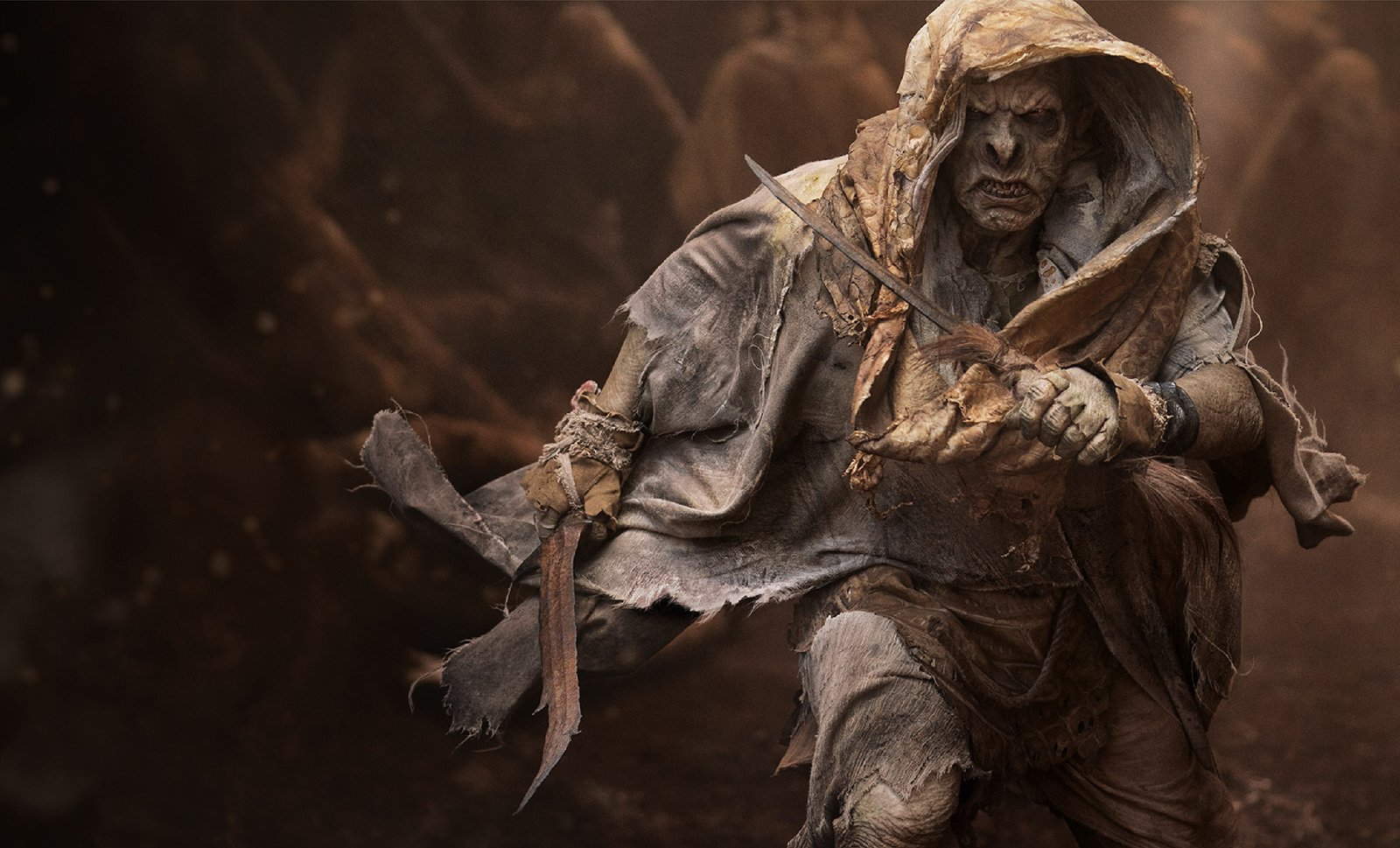
The Seductive Power of Visual Effects
Here I must acknowledge one of the series’ greatest achievements. Its visual effects, production design, sound, and cinematic atmosphere are extraordinarily immersive. The landscapes possess monumental scale. The creatures are designed to provoke powerful reactions. The interplay of darkness, movement, sound, and spectacle can command the viewer’s attention with remarkable intensity.
Indeed, I consider this technical achievement so powerful that its imagery may continue to occupy the minds of some viewers long after the screen goes dark. Faces, voices, unfamiliar words, and disturbing creatures may remain in memory and, for certain individuals, even appear in dreams.
This possibility does not establish that the series produces such experiences in every viewer. But it raises an important question about the psychological reach of visual storytelling. Cinema does not end at the screen. Its images can become memories. Its sounds can remain emotionally familiar. Its fictional characters can continue to inhabit the imagination.
And this is where I question the difference between technical success and artistic responsibility. The creators may have succeeded in making their imaginary world unforgettable. But making something unforgettable does not necessarily make it truthful, meaningful, or worthy of admiration.
Visual effects should serve the story. They should not become a substitute for its humanity.
Children, Families, and the Heroes of Tomorrow
My deepest concern extends beyond the immediate experience of adult viewers. It concerns families, children, adolescents, and the generations who will inherit the cultural imagination shaped by today’s entertainment.
Children need imagination. They need stories that introduce them to extraordinary worlds, unfamiliar possibilities, and the eternal struggle between good and evil. But they also need heroes they can recognize in real life.
What happens when the most celebrated examples of power are beings who cannot be encountered, understood, or imitated outside fictional universes? What happens to the ordinary physician who saves a child’s life? The teacher who transforms a student’s future? The mother or father who sacrifices personal comfort for the well-being of a family? The individual who chooses honesty when dishonesty would be easier?
These are the heroes whose courage exists without magical rings, supernatural abilities, or monstrous appearances. I am not arguing that fantasy automatically harms children or destroys family values. Such a claim would require evidence that extends beyond personal criticism.
I am arguing that the cultural influence of entertainment deserves serious reflection. A society should not allow its admiration for imaginary power to eclipse its appreciation of real human virtue.
Children should be encouraged to dream beyond the visible world without forgetting that they themselves possess the potential to become heroes within it.
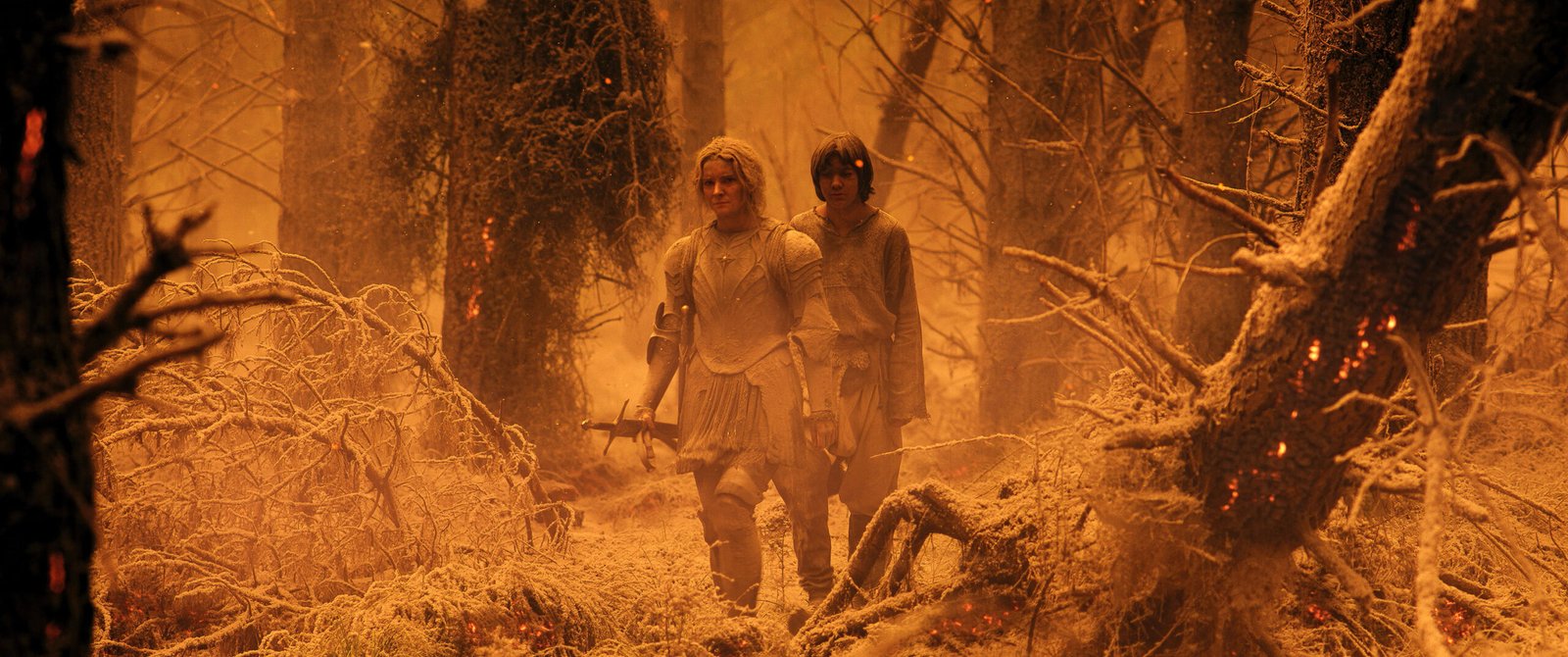
The Difference Between Humanity and the Supernatural
There is, however, a paradox within my criticism. Although I believe The Rings of Power does not sufficiently foreground the human values I consider essential, it may still provide a pretext for reflecting on the distinction between human beings and supernatural entities.
The series invites questions about the meaning of power, the boundaries of morality, and the relationship between appearance and character. What makes someone truly great? Is it the ability to command armies, manipulate minds, possess magical objects, or terrify enemies? Or is greatness found in conscience, compassion, sacrifice, responsibility, and the freedom to choose goodness over evil?
For me, the answer is clear. Human greatness does not depend on supernatural power. It depends on what a person chooses to become. Even the most extraordinary fictional creature cannot replace the moral significance of a real human being who acts with courage and compassion.
A Technical Triumph — But an Unresolved Moral Question
My criticism should not be mistaken for a rejection of the production’s craftsmanship. The scale of its fictional universe, the complexity of its visual design, and the ambition of its technical presentation deserve recognition.
Nor do I deny that Tolkien’s world contains themes of friendship, loyalty, resistance to corruption, and sacrifice. My disagreement concerns the balance between those themes and the enormous spectacle surrounding them.
The series possesses the visual resources to portray darkness with extraordinary force. But I want its humanity to possess equal force. I want its moral choices to become as memorable as its creatures. I want its portrayal of courage to reach the audience as deeply as its most frightening images. And above all, I want the spiritual and ethical significance of its story to become more powerful than the machinery of spectacle.
As the series’ narrative continues, this is an unfinished judgment rather than a verdict on the entire completed story. The writers still have an opportunity to deepen the meaning of what they have created.
Final Verdict: Let Humanity Have the Last Word
Despite all my criticisms, I have not abandoned hope for The Lord of the Rings: The Rings of Power. Regardless of how many episodes or seasons remain, I hope its writers will eventually move beyond the endless display of supernatural conflict and extraordinary creatures.
I hope they will reveal something greater. Let the story recognize faith. Let it acknowledge the greatness of the Creator. Let it demonstrate the extraordinary moral and spiritual energy of a real human being.
Humanity does not need a magical ring to possess dignity. It does not need supernatural powers to demonstrate love. It does not need the appearance of a monster to understand evil. And it does not need to escape reality to discover the meaning of courage.
I do not ask cinema to abandon imagination. I ask cinema not to abandon humanity within imagination.
The true triumph of a story should not be measured only by the intensity of its battles, the complexity of its creatures, or the magnificence of its visual effects. It should also be measured by the human values that remain after the spectacle has ended.
Let the final victory belong not merely to supernatural power, but to faith, truth, conscience, and the human spirit.
Because the greatest story is not one in which imaginary creatures conquer the world. It is one in which humanity discovers the strength to preserve its soul.