


Dutch prosecutors say Tata Steel’s coke ovens failed almost 600 times in seven years. Investigators wiretapped phones and hacked the company’s network. So why is no executive in the dock?
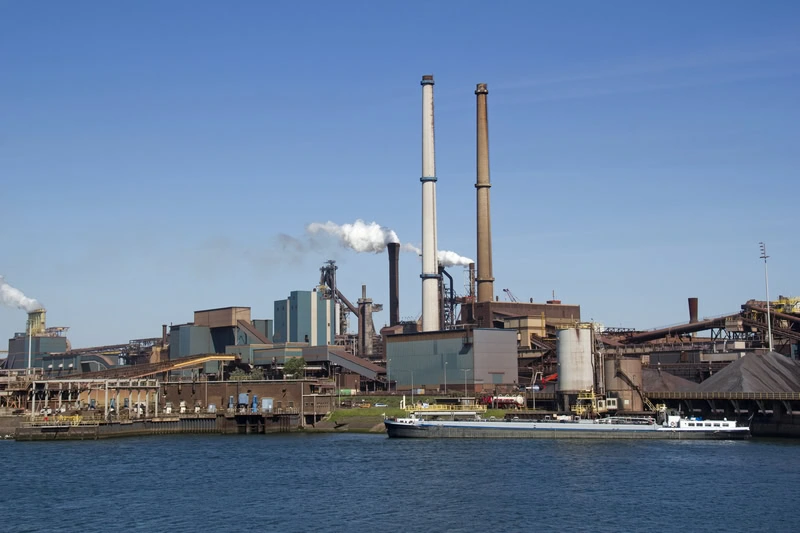
There is a seaside village on the Dutch North Sea coast called Wijk aan Zee. It has dunes, a wide beach and a few beach pavilions. It also has a neighbour that never sleeps: one of the largest steelworks in Europe. For decades, residents have complained about dust on their windowsills, a sour smell in the air and a low, constant hum. According to the Dutch National Institute for Public Health and the Environment (RIVM), up to 80 percent of them experience nuisance from dust, odour or noise.
On 20 November 2026, that neighbour, Tata Steel IJmuiden, sat in an Amsterdam courtroom as a criminal suspect. It is a moment worth watching far beyond the Netherlands, because it raises a question every industrial nation struggles to answer: when a corporation is accused of poisoning the air, who is actually responsible?
What the Prosecutors Allege
The case concerns the two coke-oven gas plants on the vast IJmuiden site. Coke is coal that has been baked at extreme heat; it is the fuel that makes blast furnaces work. When the baking is cut short, the result is so-called green coke, and pushing it out of the oven can release thick clouds of harmful substances.
The Dutch Public Prosecution Service (Openbaar Ministerie) has charged the company with five offences. The most serious is intentionally and unlawfully releasing substances of very high concern, potentially endangering public health. The others: producing green coke without the required environmental permit, failing in its duty of care by keeping damaged ovens in operation, and failing to report three incidents in 2023 to the regulator.
Tata Steel denies the charges and says it will defend itself “with full conviction”. The company argues that green coke cannot be entirely prevented for technical reasons. No court has ruled, and the company is presumed innocent.
Six Hundred Is Not a Coincidence
One number stands out. According to prosecutors, green coke was produced without a permit almost 600 times between early 2018 and July 2025. The charge sheet lists ten specific incidents, but prosecutors say the true total is far higher and describe the problem as “large-scale”.
Any engineer will tell you that heavy industry is messy. Ovens age, equipment breaks, mistakes happen. But there is a difference between an accident and a routine. One failure is bad luck. Six hundred failures in seven years, if proven, is not a malfunction. It is a way of operating.
A Signal Hidden in the Investigation
How prosecutors built the case may be as telling as the charges themselves. At the hearing it emerged that investigators had tapped telephones and secretly entered Tata Steel’s company network. They also filmed, took measurements, interviewed witnesses and seized large amounts of documents.
In the Netherlands, a supervising judge only authorises such intrusive powers when serious crimes are suspected. Environmental enforcement in Europe usually runs on inspections, warning letters and fines. Wiretaps are the tools of organised-crime investigations. That they were used here tells you how seriously the authorities view this case.
You Cannot Jail a Corporation
And yet the only defendant is Tata Steel IJmuiden B.V., a legal entity. No director, plant manager or board member stands trial.
That is not because nobody looked. The investigation started in May 2021 with a criminal complaint aimed specifically at the company’s executives. Prosecutors say they will finish their file on the role of individual managers in the first quarter of 2027, and only then decide whether anyone will be personally prosecuted. Until then, they will say nothing more.
This is the uncomfortable gap in modern corporate accountability, and it is not unique to the Netherlands. When a company is convicted, it pays a fine. Shareholders absorb a small loss; the business carries on. A corporation cannot cough, cannot lose years of life and cannot spend a night in a cell. People do those things, and in this story, the people breathing the air and the people running the ovens are not the same people.
In my view, the central question is simple. How can something go wrong almost six hundred times in one of the most closely watched factories in Europe without anyone at the top knowing? And if someone did know, why did nobody stop it? Prosecutors have not answered that question. They may never be able to. But it deserves to be asked out loud.
The Health Bill
For residents, this is not an abstract debate. Green coke releases polycyclic aromatic hydrocarbons (PAHs), some of which are known carcinogens, along with fine particulate matter and heavy metals.
In 2023, the RIVM concluded that Tata Steel’s overall emissions are directly linked to disease in the surrounding region. Around 4 percent of new lung cancer cases each year in the area are attributed to the plant’s emissions, as are around 3 percent of new asthma cases among children. People in Wijk aan Zee are expected to live, on average, about two and a half months shorter.
Those figures cover all of the site’s emissions, not just the alleged violations, and how much harm the charged incidents caused has yet to be established. But they show what is at stake when rules are bent.
Patience Has a Price
The criminal case lands at a fragile moment. Tata Steel Nederland, the former Hoogovens and later part of the Anglo-Dutch Corus group before India’s Tata Steel bought it in 2007, is cutting around 1,200 jobs. It has been ordered to clean up contaminated soil. It is considering closing the very coke plants at the heart of this case ahead of schedule. And its plans to switch to greener steel depend on billions in government support.
For years, Dutch governments have chosen patience over confrontation, giving the company time to modernise in exchange for promises. Jobs and industrial strategy are legitimate concerns. But patience only works if someone is keeping score. This case suggests that, for a long time, the people paying for that patience were the residents next door.
A Test Case for Europe
Europe is betting heavily on “green steel” and is prepared to spend public money to get there. The Tata Steel case is a reminder that money alone does not buy clean air. It also takes oversight, transparency and the willingness to hold not just companies but decision-makers to account.
The court will judge the corporation. The rest of us will have to wait until 2027 to learn whether anyone else will be judged at all. In the meantime, the dust keeps settling on the windowsills of Wijk aan Zee.
So I leave you with one question: if a company can pollute, but only a company can be punished, who is really protecting the public?
Ton Bakker
All allegations described in this article originate from the Dutch Public Prosecution Service. Until a court has ruled, the presumption of innocence applies to the company and to everyone involved. This article reflects the personal opinion of the author.
Sources: Openbaar Ministerie (Dutch Public Prosecution Service), 8 July and 20 November 2026; WNL, 20 November 2026; RIVM, 22 September 2023; NH Nieuws; DutchNews.