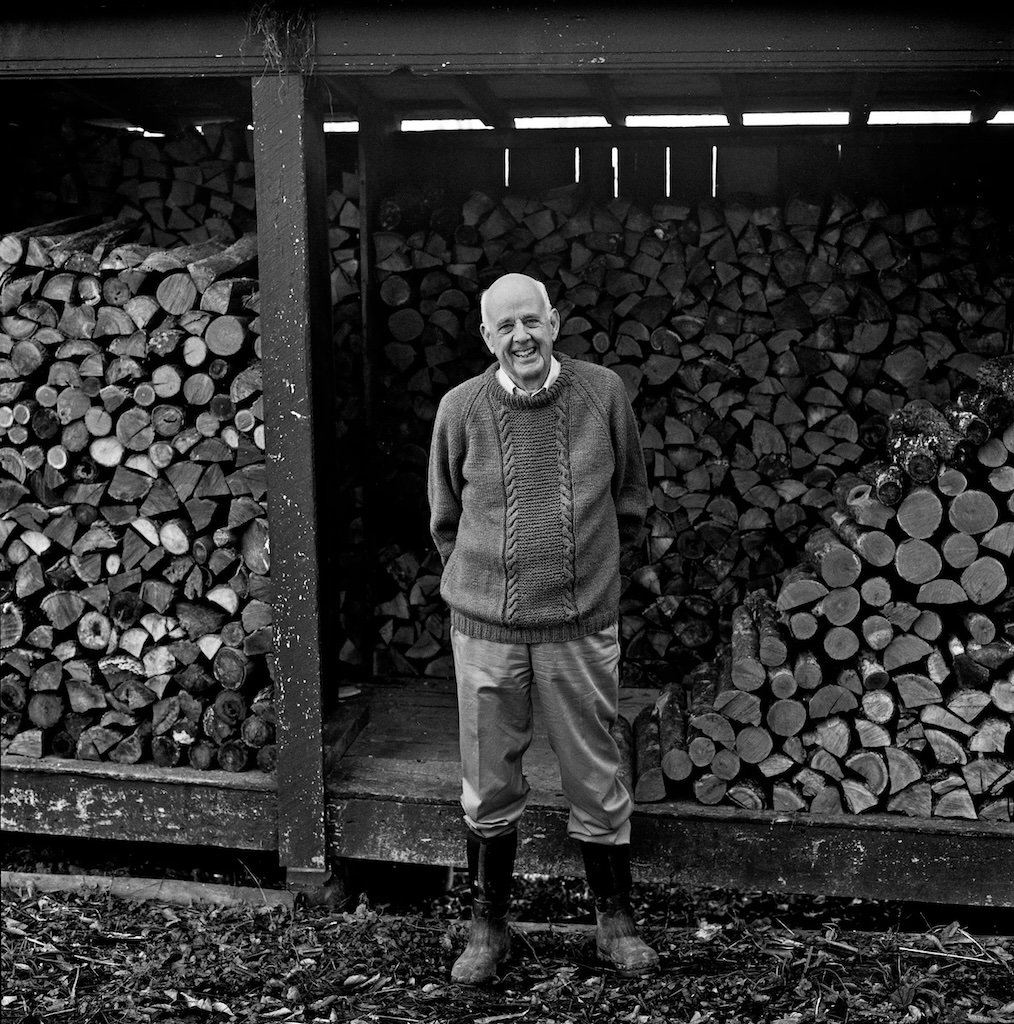
When we talk about Wendell, we imagine who he was and how he could have such a diverse personality. Wendell Berry’s poetry has always been concerned with a deceptively simple question: What does it mean to belong somewhere? In “A Homecoming,” that question becomes an exploration of memory, place, family, mortality, and the difficult work of returning home.
Who Was Wendell Berry?
Author, writer, and not just poet, Wendell Berry is one of the most influential American writers of the modern era—a poet, novelist, essayist, farmer, and environmental thinker whose work consistently challenged the separation between human beings and the land on which they depend.
I would call the city, and people living there were so lucky to have such a legend. Born on August 5, 1934, in Henry County, Kentucky, Berry grew up in a farming community that would become central to his imagination. I am the son of a farmer, and farming is one of those things that gives you 200% satisfaction. You ultimately feed every living organism on the planet. His writing repeatedly returns to the Kentucky landscape, not simply as scenery but as a living community involving soil, animals, families, work, memory, and generations.
His greatest learning success stemmed not from his degree, but from the people with whom he lived. Berry studied at the University of Kentucky, where he received his bachelor’s degree in English in 1956 and later an MFA. He subsequently spent time at Stanford University, where he studied under the novelist Wallace Stegner and became part of the Stanford creative-writing community.
He went on to teach, write, and publish across several genres. But Berry’s literary identity was never confined to one category. So, let’s explore what is in there and left for the young generation of literature for tomorrow.
He was a poet, novelist, essayist, farmer, cultural critic, advocate of sustainable agriculture, and one of America’s most long-lived critics of industrial modernity.
That combination is crucial to understanding his poetry. Therefore, for Berry, writing about nature was never merely writing about beautiful landscapes. The land was home, responsibility, history, and moral obligation.
“A Homecoming”: Why the Title Matters
The title “A Homecoming” immediately establishes one of Berry’s most important literary ideas: home is not simply a place you return to.
Homecoming can mean returning physically.
But it can also mean recovering a relationship—with one’s family, one’s past, one’s community, one’s landscape, or even oneself. That distinction is important because Berry frequently questions the modern idea that freedom means leaving. One thing was sure: Berry’s writing repeatedly asks what might be lost in that process. What happens when people become disconnected from the places that raised them? What happens when the land becomes merely property? What happens when communities become temporary rather than generational? And what happens when human beings forget that they are themselves part of nature?
“A Homecoming” can be read within this larger Berry philosophy.
Wendell Berry’s Idea of Home
For Berry, home has several meanings at once.
1. Home as a place
Home is geographical. It is a particular landscape, not an abstract idea. Berry’s Kentucky is therefore enormously important to his work. His hills, farms, rivers, woods, and fields provide the physical vocabulary through which he thinks about human existence.
2. Home as memory
Returning home also means confronting the past. The place we remember is rarely identical to the place we return to.
People die.
Buildings disappear.
Fields change.
Children grow old.
Communities transform.
The returning person has changed too.
This creates one of the most powerful tensions in Berry’s work. How can you return to a place when neither you nor the place is exactly what it once was?
3. Home as responsibility
Berry’s concept of belonging is not passive. To belong somewhere means taking responsibility for it. You cannot simply consume a landscape and call it home.
You must care for it. This principle appears throughout Berry’s agricultural writing and poetry.
Home is therefore connected to stewardship.
4. Home as a relationship
Berry’s home is also made of people. Family, neighbors, workers, farmers, lovers, and ancestors create a network of relationships. A person does not exist independently of those relationships. This is one reason Berry’s poetry often feels unusually grounded. His poems are interested in ordinary human life rather than heroic abstraction.
The Agricultural World Behind Berry’s Poetry
To understand Berry, it is impossible to ignore farming. In 1965, Berry and his family moved to Lannan Farm near Port Royal, Kentucky, where he began farming while continuing to write.
This wasn’t simply a lifestyle choice. Farming became part of his intellectual argument. Berry believed that the health of civilization depended partly on how people treated the land. Industrial agriculture, excessive consumption, and the concentration of economic power could separate people from the physical realities that sustain them.
His famous essay “The Unsettling of America: Culture and Agriculture” (1977) developed many of these arguments. His poetry often approaches the same questions differently. Where the essay argues, the poem observes. Where the essay explains, the poem allows an image to remain.
Where the essay presents a criticism of modern agriculture, the poem might show a field, a body, a tree, a road, or a returning person. This is one of Berry’s greatest strengths. He could turn an agricultural fact into a philosophical question.
Nature in “A Homecoming”
Nature in Berry is rarely decorative.
A tree isn’t merely a tree.
A field isn’t merely a field.
A road isn’t merely a road.
They participate in human memory.
This is why Berry’s nature poetry differs from the tradition of romantic landscape poetry.
In much Romantic poetry, nature can become a mirror of the individual’s emotions.
Berry reverses that relationship.
The individual is placed inside the natural world.
The landscape doesn’t exist for the poet.
The poet exists within the landscape.
That distinction is fundamental.
The homecoming, therefore, is not simply a person arriving at a house. It can be understood as a return to the larger ecological community from which modern life has separated us.
Memory and the Passage of Time
One of the deepest themes associated with “A Homecoming” is time.
Homecoming is impossible without memory.
We can only “come back” because we remember having been somewhere before.
But memory creates a problem.
Memory preserves.
Time destroys.
The remembered home may remain emotionally intact while the physical home changes.
Berry’s poetry frequently inhabits this space between preservation and change.
There is a quiet sadness in recognizing that the places we call home cannot remain frozen for us.
The poem’s significance consequently extends beyond rural Kentucky.
Almost everyone understands the experience.
You return to your childhood neighborhood and discover that the street looks different.
You visit an old house and realize that the people who made it meaningful are gone.
You walk through a familiar landscape and discover that your own memory has become part of the landscape.
The homecoming becomes an encounter between what was and what is.
The Quietness of Berry’s Poetry
Berry is not usually a poet of theatrical declarations.
His poems often derive their power from restraint.
There is an important ethical connection here.
Berry distrusts excess.
He distrusts unnecessary consumption.
He distrusts a culture that constantly demands more—more production, more speed, more possessions, more movement.
His poetic style frequently reflects the alternative.
It is attentive.
Patient.
Grounded.
Deliberate.
That makes his poems particularly powerful in an age dominated by speed.
A Berry poem asks the reader to slow down.
To look.
To listen.
To notice.
Homecoming as a Spiritual Experience
Although Berry is not easily classified as a religious poet in a conventional sense, spirituality runs deeply through his understanding of land and community.
For Berry, the natural world possesses a kind of moral seriousness.
The earth is not simply a resource.
It is something to which human beings owe obligations.
This gives “homecoming” a spiritual dimension.
Returning home can mean recovering humility.
The modern individual often imagines himself as autonomous.
Berry’s worldview proposes almost the opposite:
We are dependent.
We depend on soil.
We depend on water.
We depend on food.
We depend on other people.
We depend on generations before us.
And future generations depend upon what we do now.
The idea of home therefore carries an ethical question:
What kind of home are we leaving behind?
Berry Against the Myth of Progress
One of the most important aspects of Berry’s work is his skepticism toward conventional definitions of progress.
Modern society often measures progress through:
- economic growth;
- technological development;
- urbanization;
- productivity;
- speed;
- consumption.
Berry asks whether these measurements tell us anything about the quality of human life.
A community may become richer while becoming less connected.
A farm may become more productive while its soil deteriorates.
A person may become more mobile while becoming less rooted.
A society may possess extraordinary technology while losing its ability to live sustainably.
This tension is everywhere in Berry.
And it makes “A Homecoming” more than a personal poem.
It becomes part of a larger cultural argument.
The Meaning of Returning
A particularly interesting question is whether the person who comes home is actually the same person who left.
The answer, inevitably, is no.
Leaving changes us.
Experience changes us.
Age changes us.
Loss changes us.
Therefore, homecoming is never simply a reversal of departure.
You cannot undo the journey.
Instead, you bring the journey with you.
This is what makes the idea emotionally powerful.
The returning person carries memories of elsewhere into the place that formed them.
Home becomes something newly understood.
In this sense, homecoming is not merely going back.
It is seeing home differently.
Berry’s Language of Ordinary Things
Berry’s poetry is filled with ordinary objects and experiences.
That is deliberate.
He does not require grand historical events to make a poem meaningful.
A farm.
A road.
A house.
A field.
A tree.
A family.
Work.
Rest.
Death.
These are enough.
His achievement lies in showing that the ordinary is not insignificant.
In fact, the ordinary is where human existence happens.
This is particularly important in contemporary literature, where writers are often tempted toward spectacle.
Berry offers another possibility:
Attention itself can be revolutionary.
To pay sustained attention to a place is to resist a culture that encourages constant movement and distraction.
Death and Berry’s Poetry
Death is also inseparable from Berry’s idea of home.
A homecoming is meaningful partly because people do not live forever.
The house remains.
The landscape remains.
The generations change.
The individual eventually disappears.
Berry’s poetry often treats mortality without melodrama.
Death belongs to the natural order.
But that does not make loss painless.
Instead, mortality intensifies our responsibility.
If our lives are temporary, then how should we treat the places and communities entrusted to us?
Berry’s answer is essentially
Care for them.
Wendell Berry’s Place in American Literature
Berry belongs to several literary traditions at once.
He can be read alongside the American nature writers, particularly Henry David Thoreau.
He shares Thoreau’s suspicion of industrial civilization and his insistence that human beings rethink their relationship with nature.
But Berry is more deeply rooted in agriculture and community.
He also belongs to the tradition of American rural writing.
Yet he is not simply a nostalgic writer celebrating an imagined past.
His work is frequently argumentative.
He wants readers to reconsider how modern society organizes food, work, land and community.
And he belongs to the tradition of the literary essayist.
His nonfiction can be as influential as his poetry.
Together, these forms create a single body of thought.
The Port William Connection
Berry’s fictional universe of Port William, a fictional Kentucky community, is especially important for understanding his philosophy.
Through novels and stories, Berry constructed a community that exists across generations.
People grow old.
Families experience conflict.
People marry.
People work.
People die.
Others remember them.
The community itself becomes almost a character.
This fictional world reinforces the same idea found in his poetry:
A person becomes fully human through relationships with place and other people.
“A Homecoming” can therefore be read alongside Berry’s larger Port William project.
The home is not simply an address.
It is a network of memory.
Why Wendell Berry Still Matters
Berry’s concerns have become even more relevant in the twenty-first century.
Climate change has transformed the conversation about agriculture and land.
Industrial food production has raised questions about soil, biodiversity, and sustainability.
Digital culture has made physical places simultaneously less important and more precious.
Remote work allows people to live almost anywhere.
Social media allows communities to exist without geographical proximity.
At the same time, loneliness and social fragmentation have become increasingly visible problems.
Berry’s work offers a provocative response.
He asks us to reconsider the value of rootedness.
Not isolation.
Not nationalism.
Not rejection of modernity for its own sake.
But rootedness.
Knowing a place.
Knowing the people around you.
Understanding where food comes from.
Taking responsibility for the ground beneath your feet.
A Homecoming in the Modern World
Read today, “A Homecoming” can be interpreted beyond Berry’s Kentucky landscape.
It can speak to anyone who has left home.
The immigrant is returning to a childhood country.
The student is returning to a village.
The adult visiting a parent’s house.
The farmer returning to the land.
The city dweller remembering a rural childhood.
The person returning after years of emotional distance.
The poem’s fundamental question becomes universal:
What does it mean to belong?
And perhaps an even harder question follows:
Can we belong to a place without taking responsibility for it?
Berry’s answer throughout his work is essentially no.
Belonging carries obligations.
The Enduring Power of Wendell Berry
The importance of Wendell Berry does not come from novelty.
His ideas are remarkably old.
Care for the land.
Know your neighbors.
Value work.
Eat responsibly.
Remember the dead.
Respect limits.
Preserve what you inherit.
Think about those who will come after you.
What makes Berry distinctive is that he brought these apparently simple principles into sustained conversation with the enormous forces of modern capitalism, industrial agriculture, and technological change.
His poetry gives those arguments emotional depth.
And “A Homecoming” is particularly valuable because the idea at its center is something almost everyone understands.
We leave.
We change.
We remember.
And eventually, in one form or another, we try to return.
Final Reading: What Does “A Homecoming” Ultimately Mean?
At its deepest level, “A Homecoming” can be understood as a poem about belonging after change.
Home is not merely where we were born.
It is what continues to shape us after we leave.
Berry reminds us that returning to a place is also returning to memory, responsibility, and mortality.
The landscape remembers differently than we do.
The house changes.
The people disappear.
The fields continue.
And the returning person discovers that home was never simply a physical location.
It was a relationship.
That is why Berry’s work has endured.
He writes about farms and roads, trees and seasons, and families and neighbors—but underneath these subjects lies a much larger question:
How should a human being live in a particular place, for a limited time, without destroying the possibility of home for those who come next?
That question makes Wendell Berry’s poetry feel remarkably contemporary.
And it is perhaps the most lasting meaning of “A Homecoming.”
A Homecoming by Wendell Berry
One faith is bondage. Two
are free. In the trust
of old love, cultivation shows
a dark and graceful wilderness
at its heart. Wild
In that wilderness, we roam
the distance of our faith;
safe beyond the bounds
of what we know. O love,
open. Show me
my country. Take me home.