


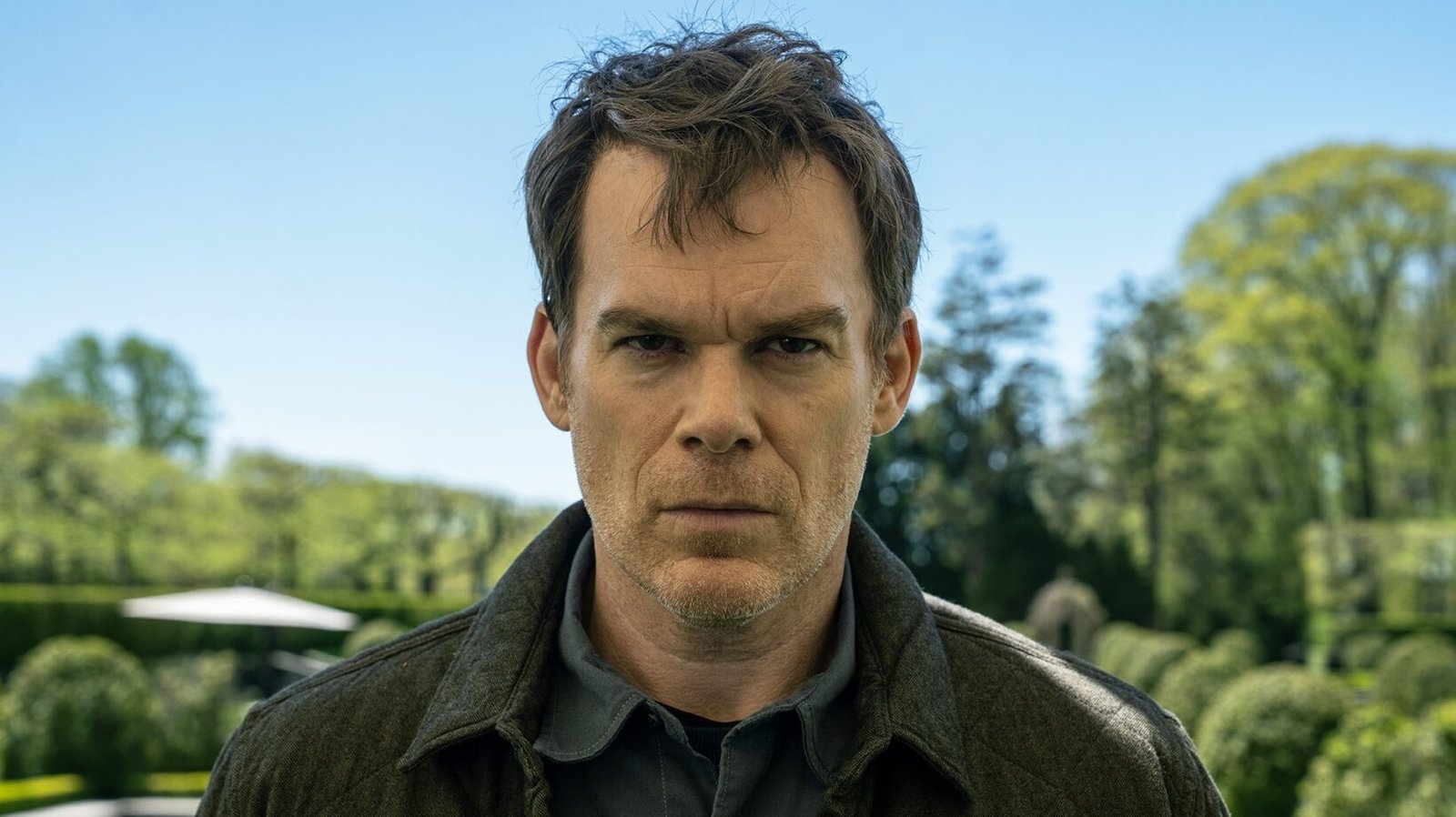
There is a familiar observation about enlarging a photograph: beyond a certain point, the image loses its sharpness. Television franchises can suffer the same fate. The more relentlessly a story is expanded, the less clearly its original purpose may survive. Dexter: Resurrection brings Michael C. Hall back as Dexter Morgan, recovering from a gunshot wound and pursuing his estranged son Harrison in New York City. It also raises a question that goes beyond the mechanics of another revival: does the franchise still have a necessary story to tell, or has the continuation itself become the point? This is a critical interpretation, not a claim about the creators’ private motives.
The Image That Loses Its Clarity
Why Dexter Was Compelling in the First Place
The original attraction of Dexter was not merely his ingenuity or the macabre precision of his rituals. It was the uncomfortable possibility that an audience frustrated by institutional failures might find satisfaction in an individual delivering what looks like justice. Dexter targets people who have committed terrible crimes, and the viewer may feel relieved when they cannot escape him. That emotional response is precisely what makes the premise disturbing. Understanding why viewers root for Dexter is not the same as proving that Dexter is right. The series’ distinctive achievement was to make that distinction difficult to ignore.
A Killer Cannot Appoint Himself the Law
Dexter is not an independent court. He takes on the roles of investigator, prosecutor, judge, and executioner without a fair hearing, defense, oversight, or meaningful appeal. His code may channel his homicidal impulses, but it cannot transform private violence into legitimate public justice. Justice cannot be defended by destroying the safeguards that make justice possible. The failure of a judicial institution in a particular case is a reason to demand reform and accountability, not a general license to kill. If every individual exercised the same supposed right, the outcome would be competing private verdicts, fear, and arbitrary power: the opposite of justice.

The Audience’s Emotional Complicity
The troubling narrative mechanism is easy to recognize: establish that a prospective victim is monstrous, invite viewers to anticipate punishment, and make the killing feel like release. Viewers are not literally accomplices to fictional crimes, and fiction depicting violence does not by itself demonstrate real-world harm. Yet a critic may still ask whether the series encourages an emotional identification with execution rather than accountability. Making murder satisfying does not make it just. This is not a call to censor crime drama; it is a demand to examine how a crime drama frames its protagonist and the consequences of his choices.
Read more: The Rings of Power: When Fantasy Overshadows Faith, Humanity, and the Truth of Creation
A Different Road for Dexter and Harrison
The writers had a potentially richer path available. Dexter’s forensic experience, ability to detect patterns and intimate knowledge of violent offenders could have supported a story in which he and Harrison confront the law rather than simply evade it. They might expose failures of evidence, challenge corrupt practices, prevent new crimes, and face the consequences of past acts. Harrison could challenge his father’s belief that killing is the only meaningful response to injustice. Such a transformation would not need to absolve Dexter or manufacture a sentimental redemption. Indeed, legal accountability and the possibility of punishment would make it harder, and therefore more dramatic. The most difficult victory for this character might be choosing not to kill.
Performances, Setting, and Narrative Construction
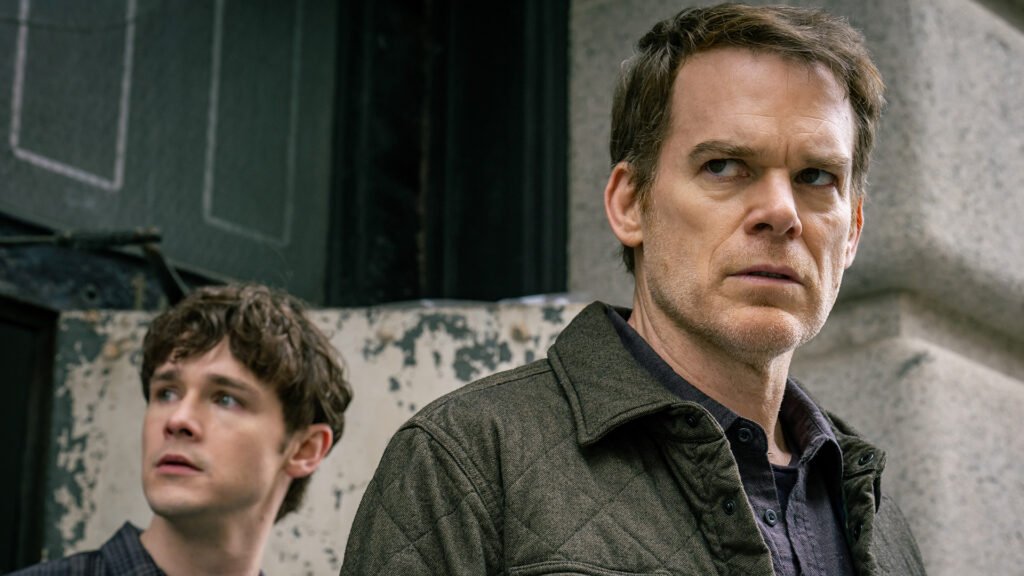
Michael C. Hall remains an important reason to watch: his controlled manner and ability to suggest competing impulses give Dexter a recognizable psychological texture. Jack Alcott’s Harrison offers the series a possible counterweight, since the father–son relationship can test whether violence is a legacy or a choice. Peter Dinklage’s Leon Prater, a wealthy collector fascinated by serial killers, introduces a self-conscious spectacle of murderous celebrity; Uma Thurman’s Charley supplies another point of pressure in that world. New York shifts the franchise away from its Miami identity, widening the scale and placing Dexter amid a different social environment. These are genuine dramatic opportunities. Yet the serial-killer gatherings also risk turning the premise into a parade of eccentric threats, where novelty of packaging substitutes for novelty of moral insight. The suspense is less potent when the viewer recognizes the cycle: identify a predator, rationalize a pursuit, confront danger, and escape into the next chapter.
A Specific Test of the Story’s Moral Logic
The official episode guide offers an illuminating progression: Dexter awakens from a coma in “A Beating Heart…”; “Camera Shy” places him on the trail of a New York serial killer; “Call Me Red” introduces a mysterious gathering; and the finale, “And Justice For All…,” promises consequences for Dexter and Harrison’s darkness. Even the finale’s title invites the essential question: justice for whom, and under whose authority? Angel Batista’s renewed suspicions about Dexter’s past offer a potentially powerful institutional counterargument to the protagonist’s self-justifying perspective. Whether the narrative allows that challenge to retain its force matters more than simply inventing another dangerous opponent. This review focuses on the completed first-season arc and the franchise’s direction; it does not claim a verdict on an unfinished second season.
The Walking Dead and the Cost of Endless Continuation
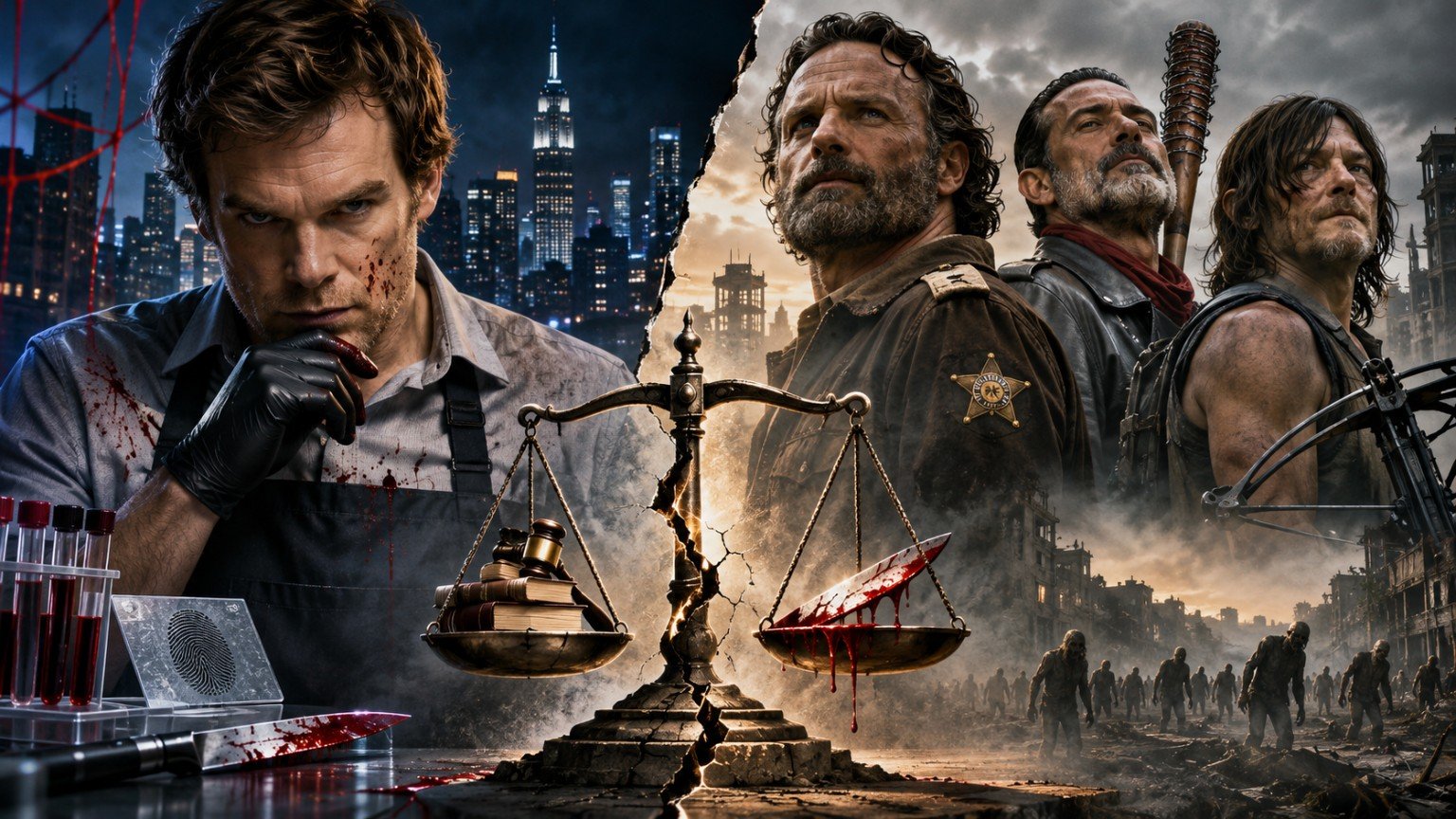
The problem extends beyond Dexter. The Walking Dead built a lasting mythology around Rick Grimes, Negan, and Daryl Dixon, whose dramatic impact came from specific conflicts and changing relationships. The expanding franchise has kept these figures circulating through separate stories, including The Ones Who Live, Dead City, and Daryl Dixon. Such continuations can be legitimate: Negan’s evolution, for example, may be read as an attempt to confront the consequences of cruelty rather than merely preserve his menace. My concern is different. When the same recognizable characters must repeatedly anchor new crises, their distinctiveness can become diluted. A figure once remembered for a singular emotional effect risks becoming a reusable franchise mechanism. This is an aesthetic judgment, not a claim that the actors were wrong to accept their roles or that every spin-off lacks merit.
Commercial Success Is Not Artistic Necessity
Television is an expensive collaborative medium. Audiences may genuinely want more stories, and commercial considerations are neither unusual nor inherently disreputable. But a profitable continuation still requires a compelling artistic reason to exist. Recognizable names, production values, and a familiar atmosphere cannot fully replace character development, surprise, or thematic progression. The strongest criticism of these franchises is not that they make money. It is that repetition can gradually displace the dramatic uncertainty that made them valuable in the first place.

Conclusion: Let a Character Become a Legacy
A fictional murderer can be fascinating without being heroic. A damaged protagonist can invite sympathy without earning moral immunity. And a series can criticize the failures of the justice system without appointing its antihero the sovereign power to execute. Dexter: Resurrection retains the talents of its lead performer, a charged father–son relationship, and a new urban stage, but it also carries the burden of a formula that has been revived repeatedly. My central objection is not that Dexter survives; it is that survival too often appears to return him to the same moral and narrative destination. The greatest tragedy of modern television is not the death of beloved characters but the gradual destruction of their legacy through stories that refuse to end. Sometimes the boldest ending is an ending.