
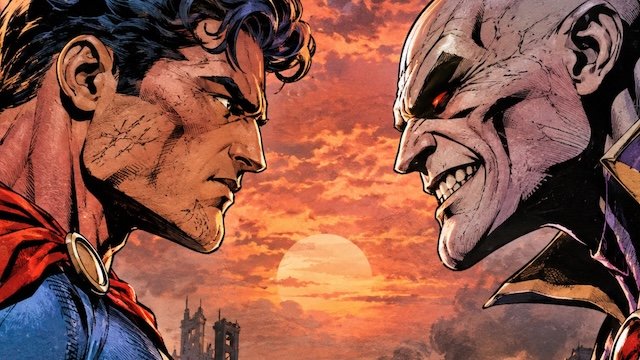


What would Batman be without the Joker? Superman without Lex Luthor? The Avengers without Thanos?
For generations, millions of moviegoers have celebrated the victories of superheroes. Yet many of their enemies have achieved something equally extraordinary: a permanent place in our collective memory.
Cinema has taught us to admire those who save the world, but it has also made us remember the masks, voices, and unforgettable words of those who threaten to destroy it.
This raises a fascinating question: Who is truly more famous, superheroes or supervillains?
A Battle That Began Almost a Century Ago
In 1938, Superman appeared in Action Comics. Batman made his debut the following year. Both eventually became universal symbols of hope, justice, and courage.
But their adversaries also made history. The Joker appeared in 1940, while Spider-Man debuted in 1962 and the Green Goblin in 1964.
Cinema multiplied their popularity. Christopher Reeve immortalized Superman in 1978. Michael Keaton portrayed Batman in 1989, facing Jack Nicholson’s unforgettable Joker.
Decades later, Heath Ledger received a posthumous Academy Award for his portrayal of the Joker, while Robert Downey Jr. transformed Iron Man into a central figure in the Marvel universe.
The Giants Face-to-Face
Superman represents hope; Lex Luthor, limitless ambition. Batman symbolizes discipline in the fight against crime; the Joker embodies chaos.
Spider-Man defends personal responsibility, while the Green Goblin uses his extraordinary abilities to spread terror.
Iron Man demonstrates the potential of intelligence and technology, while Thanos represents a threat driven by an extreme idea: sacrificing countless lives to impose his vision of universal balance.
Wonder Woman, Captain America, Thor, and Black Panther complete a gallery of heroes who have captivated different generations.
Among the antagonists, Magneto, Loki, and the Joker stand out for their psychological contradictions, which allow them to transcend the traditional role of the enemy.
Superman, Batman, and Spider-Man are strong candidates for the world’s most recognizable superheroes. The Joker, Thanos, and Lex Luthor stand among their most famous adversaries, although no single worldwide survey establishes a definitive winner.
Science Explains Why Villains Fascinate Us
Why are we curious about characters whose actions we reject?
Research published in Scientific Reports in 2023 by Jordan Wylie and Ana Gantman examined moral curiosity through five experiments involving 2,429 participants.
The findings suggested that people can experience particular curiosity about morally extreme individuals, whether good or evil.
Another study published in Poetics in 2021, involving 1,805 American participants, examined the relationship between personality traits and affinity for fictional villains.
The distinction is important: being fascinated by a villain does not mean approving of their behavior.
Cinema allows us to explore fear, power, and human contradictions from the safety of a fictional story.
A Multibillion-Dollar Industry
Released in 2019, Avengers: Endgame brought Marvel’s heroes face to face with Thanos and his forces.
The film earned approximately $2.8 billion during its initial theatrical run, becoming one of the greatest commercial successes in cinema history.
But that extraordinary figure raises a question that financial statistics alone cannot answer: How many spectators went to admire the Avengers, and how many wanted to discover the fate of Thanos?
Box-office revenue measures a film’s commercial success, not the individual popularity of each character.
History Has Its Favorites Too
In 2003, the American Film Institute selected fifty iconic heroes and fifty villains from American cinema.
Atticus Finch, the protagonist of To Kill a Mockingbird, topped the heroes’ ranking. Hannibal Lecter, from The Silence of the Lambs, led the villains’ list.
Darth Vader ranked third among the villains. Although he belongs to Star Wars rather than the traditional superhero genre, his mask and story of redemption made him a worldwide cinematic icon.
The AFI list includes characters from different genres and is not a measure of worldwide fame. Nevertheless, it demonstrates the extraordinary cultural importance of heroes and villains.
Who Ultimately Wins This Battle?
Perhaps the secret is that great heroes need extraordinary adversaries.
Without the Joker, Batman would lose one of his greatest challenges. Without Lex Luthor, Superman would inhabit a very different universe. Without Thanos, the Avengers would never have experienced one of their most memorable confrontations.
Heroes represent what we aspire to become.
Villains represent what we fear becoming.
One inspires hope. The other awakens fear and curiosity.
Both allow us to explore our own contradictions.
And perhaps that is where their greatest lesson lies: in our ability to confront and overcome the darker side of ourselves.
Because in cinema, superheroes may win the battles.
But supervillains never agree to disappear from history.
Hero or villain: Who is your favorite?