


Colombian choreographer, performer, and artistic director Estefanía Forero Yacamán is developing an independent creative platform through Third Gravity Dance Company, bringing together movement, visual art, music, and individual artistic expression. Based in the New York and New Jersey area, Forero’s choreographic practice draws on a wide range of influences, from her Colombian roots and formal dance training to fashion, visual composition, and unconventional theatrical ideas.
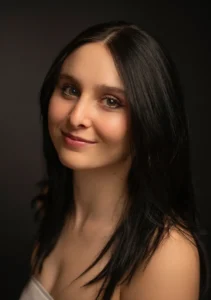
In this conversation with NYCritics, Forero reflects on the experiences that have shaped her artistic identity, the creative philosophy behind Third Gravity, and the process of developing a distinctive choreographic voice. She discusses artistic freedom, collaboration with dancers, the balance between structure and improvisation, and the challenges of establishing an independent dance company. She also shares her ambitions for the future and why remaining curious, embracing experimentation, and enjoying the creative process are central to her work. Let’s explore her journey, discover how she shaped her identity, and uncover the experiences that have made her an inspiration to others.
The Gravity of Movement: Estefanía Forero Yacamán on Art, Identity, and Finding Her Choreographic Voice
An Interview with Estefanía Forero Yacamán, Artistic Director of Third Gravity Dance Company
1. How have your Colombian roots and your experience living and working in the United States shaped you as an artist?
Estefanía Forero Yacamán: Growing up in Colombia gave me a certain perspective on life and art. I associate Colombian artists with a lot of joy, authenticity, and playfulness. There’s something very genuine about the way people create and enjoy what they do. Living away from home has also made me more sensitive to everyday experiences. Sometimes, distance makes you notice things you might have taken for granted before.
Moving to the United States allowed me to develop choreography more formally and explore a professional dance environment differently. I don’t necessarily set out to incorporate Colombian elements into every piece, but they sometimes appear organically.
Music and movement traditions I grew up around, such as salsa and mapalé, can influence the way I approach rhythm, energy, or musicality. I don’t want to limit myself to one cultural identity, but it’s naturally part of who I am and how I create.
2. Was there a particular moment when you realized dance was something you wanted to pursue professionally?
Estefanía Forero Yacamán: I think one of the most important moments happened when I was around thirteen. I was studying at Nuova Ballet Studio in Chía, Colombia, and my teacher, Martha Pérez, encouraged me to consider pursuing dance professionally. Having someone recognize that possibility in me at such a young age made a big difference.
As for choreography, that developed more gradually. One of my first formal choreographic experiences was Untamed, a dance film I created for a showcase at the American Dance Festival in 2023. That experience helped me realize how much I enjoyed creating movement and building an entire work from an idea.
3. How do you navigate your Colombian identity while developing an artistic voice that isn’t necessarily defined by one cultural label?
Estefanía Forero Yacamán: I think it’s important to acknowledge where I come from without feeling that every work I create has to represent it. Colombia has a different professional dance infrastructure and fewer opportunities in certain areas, so being able to develop my work in the United States has made me appreciate the opportunities I’ve had.
At the same time, I would love to contribute to making Colombian artists more visible as innovative, playful, and authentic creators. I don’t think Colombian artists should only be recognized when they’re making work specifically about Colombia or Colombian identity. We should be able to create anything.
For me, artistic freedom comes from following what genuinely interests me rather than trying to fulfill someone else’s expectations. I want to make work that feels honest to me, even if it doesn’t fit neatly into a particular category.
4. You studied Fashion Design alongside dance. How has that background influenced your choreography and visual approach?
Estefanía Forero Yacamán: Studying fashion and dance at the same time was definitely challenging, but it shaped the way I think about a performance as a complete visual experience. I’m interested in more than just the movement onstage. I think about the relationship between the concept, costumes, colors, lighting, and the overall atmosphere.
Fashion has made me particularly attentive to how clothing can change the appearance and movement of a dancer. A costume can create a silhouette, alter proportions, or introduce a visual element that becomes just as important as the choreography itself. I enjoy thinking about how all these components interact and how they can strengthen one another.
5. The name “Third Gravity” has a connection to the ideas of earth, people, and force. How do those three concepts relate to your artistic philosophy?
Estefanía Forero Yacamán: I think of the three gravities as different forces that shape our existence.
The first is the earth: our origin, our foundation, and the literal gravity that holds us to the ground. It’s something universal that we all experience.
The second is people. The relationships we build and the individuals we encounter constantly influence us. Everyone has their own energy, their own kind of gravitational field, and those interactions affect who we become.
The third is force: the action, movement, and impact we create. It’s about what happens when we act on something, challenge stillness, or push beyond what seems possible. I like the idea that we’re constantly being shaped by these different forces while also creating forces of our own.
6. What inspired you to establish Third Gravity Dance Company, and what kind of environment are you hoping to create through it?
Estefanía Forero Yacamán: I wanted to create a space where I could develop my choreographic work without feeling limited by someone else’s artistic expectations or the identity of an existing company. I also wanted to build an environment where different artists could come together, contribute their individuality, and be challenged creatively.
I care a lot about the people I work with and the atmosphere in the studio. I want rehearsals to be productive and focused but also welcoming and enjoyable. I don’t think a creative environment has to be intimidating to produce fruitful work.
When I’m casting, I sometimes picture a dancer’s face in the world of a piece before I even picture them moving. If their presence feels like it belongs in that world, I pay attention to that instinct. Of course, I also consider their movement, skills, artistic background, and what they can bring to the work. I enjoy finding ways to challenge myself as a choreographer by adapting material to the specific dancers I’m working with.
7. How do you balance your own choreographic vision with the creative contributions of the dancers you work with?
Estefanía Forero Yacamán: Usually, I have a choreographic vision that provides the foundation for a piece, but I don’t think that means every decision has to come exclusively from me. The dancers have an inside perspective that I simply don’t have, especially because I don’t usually perform in my own works. They’re the ones experiencing the movement physically, so their observations and contributions can reveal things I might not have considered.
I like giving dancers creative freedom and asking them for suggestions or assigning them tasks that allow them to contribute to the process. I still care about precision and maintaining the identity of the work, but I also want the dancers to feel that they have ownership of what they’re performing.
Once a piece is complete, I sometimes feel like I’m passing the baton to the dancers. The work becomes theirs. They’re the ones who bring it to life every time it’s performed, and I think that’s an important part of the relationship between a choreographer and their performers.
Looking ahead, I’d also love for Third Gravity to become a platform for other choreographers, including members of the company and emerging artists outside of it. I want to create opportunities for different artistic voices to be seen.
8. What would you say distinguishes your choreographic style?
Estefanía Forero Yacamán: I’m particularly interested in intricacy and detail. I love working with hands, gestures, small movements, and specific moments that might initially seem insignificant but become important through timing or repetition. I also enjoy incorporating a little bit of humor, unusual movement qualities, props, and unexpected visual details.
I tend to follow ideas even when they seem a little ridiculous at first. Sometimes I’ll have an impulse or an image that I’m not sure will work, but I want to explore it before deciding. I enjoy finding the balance between something technically demanding and something quirky or unexpected.
I’m also very influenced by visual artists and choreographers. I admire the work of artists such as Sharon Eyal, Marco Goecke, and Marcos Morau, as well as the way painters like Monet and Van Gogh use color, light, rhythm, and atmosphere. I don’t necessarily try to reproduce those influences, but they inform how I think about movement and the visual world of a piece.
9. Do you find yourself returning to particular themes or subjects in your choreography? How has your work evolved over time?
Estefanía Forero Yacamán: I don’t think I have one recurring theme. My works can be quite different from one another because I tend to follow whatever interests me at a particular moment. I’ve explored dreams and the subconscious in Hysm, Colombian social culture in Agua Ardiente and Nombe, aging and companionship in Aubade, and questions about expression and free will in SPEAK and Chint. Sometimes I begin with a movement quality or a general atmosphere, and the subject develops afterward.
One work that challenged me creatively was Aubade. It was a work that had a more narrative approach than I usually work with. I naturally tend to think abstractly, so developing a clearer storyline was a different kind of challenge. I have a lot of respect for artists who are particularly skilled at linear storytelling because it’s not necessarily where I feel most comfortable.
I’ve also had to learn to let go of some of my habits as a choreographer. When I first started creating work, I planned almost everything. I would come into the studio knowing the counts, the movements, and the details I wanted to achieve. If I wasn’t prepared, I didn’t always trust myself to create something on the spot.
With Hysm, I intentionally approached the process differently. I came into the studio with a conceptual plan but without having choreographed the movement beforehand. At first, that was nerve-racking. But I discovered that I really enjoyed creating on the spot. I realized how much pressure I had been putting on myself by relying so heavily on preparation.
That experience taught me to let go of ideas, allow things to change, and trust the creative process more. Of course, not everything created spontaneously is worth keeping. You still have to recognize what works and what needs to be discarded. But I learned that nothing is permanent and that changing an idea doesn’t mean losing something valuable. Since then, I’ve become more comfortable balancing preparation with spontaneity. I had a lot of fun making Hysm, and it opened up a different way of working for me.
10. What does your creative process usually look like? Where do you begin when developing a new work?
Estefanía Forero Yacamán: I usually begin with a visual concept, a piece of music, or a general atmosphere. Music is probably the most common starting point for me. Once I connect with a song, it opens up so many possibilities: different images, moods, movement qualities, and ideas about what the piece could become.
I don’t usually know exactly what the finished work will look like before entering the studio. I enjoy discovering that through the process. If I already knew every detail before beginning, I think I would lose some of the opportunity to research, experiment, and find things I hadn’t anticipated.
Musicality is a big part of how I create. Sometimes the choreography is very precise and closely connected to the music, with specific counts, accents, and syncopations. Other times, I like working with a looser relationship to the music, where dancers follow its atmosphere and their own internal timing. I enjoy finding ways to make those approaches coexist.
For me, the process is about exploration. Even if an experiment doesn’t become part of the final piece, I still find value in having discovered something through it.
11. How much of your choreography is set, and how much room do you leave for improvisation?
Estefanía Forero Yacamán: Most of my choreography is set, especially when it comes to performance. I like having a clear structure and knowing what is happening, but improvisation can be a useful tool during the creation process.
Sometimes I’ll improvise myself or ask dancers to improvise with a specific task or set of instructions. We might discover movement that I wouldn’t have thought of otherwise. I can then select, modify, and organize that material into the choreography.
I enjoy working with musicality, including accents, syncopations, and unexpected rhythmic patterns. At the same time, I don’t want everything to feel mechanically fixed. There are moments when I prefer dancers to follow a more internal rhythm or respond to the general feeling of the music.
I think the balance between structure and experimentation is what makes the process interesting. I want the work to have a clear identity without eliminating the possibility of discovery.
12. What kind of relationship do you hope to establish between your work and the audience? Do you want viewers to understand what they’re watching?
Estefanía Forero Yacamán: I don’t necessarily need the audience to understand everything. I like leaving room for people to bring their own experiences, assumptions, and questions to a piece. My work can be abstract, and even when there’s a clearer subject or story behind it, I don’t always want the audience to follow a completely linear narrative.
I enjoy when people come up with different interpretations of the same work. Sometimes they notice something or make a connection that I hadn’t considered at all. Even negative reactions can be interesting to hear because they reveal another way of looking at something I’ve created.
I want people to lean in, question things, laugh, feel curious, or simply enjoy what they’re seeing. I don’t think there’s one correct way to experience a performance, and I find that openness exciting.
13. What are some of the biggest challenges facing independent choreographers and emerging dance companies today?
Estefanía Forero Yacamán: New York has got to be one of the places in the U.S. with the most competitive environment, especially since so many of the best movers and makers I know are located here. There is a high level of artistic activity, which means there are many people creating exciting work and seeking opportunities to present it. At the same time, I think that makes it a particularly exciting place to develop as an artist, and even more so as an artistic director.
I’ve been fortunate enough to have several opportunities to present my choreography through different showcases and festivals across New York and New Jersey. Each experience has allowed me to develop my work, connect with other artists, and contribute to building a bigger audience.
Establishing Third Gravity has, of course, given me a stronger platform where I can take greater ownership of my artistic direction and develop projects on my own terms.
14. How do you see dance interacting with other artistic disciplines in your work?
Estefanía Forero Yacamán: I’m very interested in exploring how different artistic disciplines can contribute to the visual and theatrical experience of a dance performance. Choreography and movement will always be at the center, but I see a lot of potential in collaboration with artists from other fields to expand the world surrounding a piece.
Costume design is particularly important to me. I’d love to collaborate more with fashion designers and explore how their work can become part of my choreographic productions. For my piece Eleven Stars, inspired by Van Gogh’s The Starry Night, I designed and constructed the costumes myself, drawing ideas from the painting’s palette of blues, yellows, and whites to create a visual world that reflects its atmosphere. I’ve also modified pieces of clothing for costumes in many of my other works to fit my dancers and the visual concept.
I’d also be interested in incorporating live music, collaborating with visual artists on stage environments, and presenting dance works in museums or other cultural spaces. Photography and video are equally valuable to me as ways of documenting and preserving our creations.
Ultimately, I want to explore how these elements can enrich a dance performance while keeping the dancers, movement, and choreography at its center.
15. Where do you see Third Gravity Dance Company in five years?
Estefanía Forero Yacamán: I hope to see Third Gravity continue growing as an established dance company, with more opportunities to present and commission choreographic work, collaborate with other artists, and tour nationally and internationally. I’d also love to bring guest choreographers into the company to create work for our dancers and eventually establish a permanent home for Third Gravity.
On a personal level, I want to continue developing my career as an independent choreographer, creating work for other companies and institutions while continuing to perform and teach. Ultimately, I want to keep expanding the kinds of choreographic opportunities and artistic collaborations I can be a part of.
16. What do you hope audiences take away from experiencing your work?
Estefanía Forero Yacamán: I want audiences to leave with questions. They don’t necessarily have to be positive or negative questions; I’m interested in the fact that something made them stop and think, even if they aren’t entirely sure what they just experienced.
Depending on the work, I enjoy seeing an audience laugh, feel uncomfortable, or simply appreciate the visual experience. I don’t believe dance always needs to communicate a clear message or tell a specific story. Sometimes, dance for the sake of dance is meaningful enough. A work can begin with something very simple and still become a much larger experience through the way it’s developed and presented.
I’m also interested in how differently people interpret the same piece. Sometimes audience members notice details or make connections that I hadn’t considered at all. Even hearing a negative interpretation can be fascinating because it gives me another perspective on something I’ve created.
For me, an artistic experience is memorable when I can still recall specific details weeks after seeing it. I’d love for my work to leave that kind of impression, whether through a movement, an image, a feeling, or a question.
17. What advice would you give to young dancers and choreographers who are trying to establish themselves?
Estefanía Forero Yacamán: My biggest advice would be not to change yourself or abandon what genuinely interests you just to fit in. Art isn’t about fitting into a particular mold. It might take time, but eventually, you’ll find the people and spaces that understand and appreciate your work.
I’d also encourage young choreographers to remain open to feedback without automatically accepting every suggestion. If someone offers an idea that doesn’t resonate with you, you should be able to explain and stand by your artistic decisions. You don’t have to remove something simply because someone else doesn’t understand it. Sometimes, instead of abandoning an idea, you can use the feedback as an opportunity to make it stronger. At the same time, it’s important to recognize when it’s time to let go of an idea. That’s difficult, but it can be incredibly valuable.
Starting a company is a lot of work, so I would only recommend doing it if you’re genuinely passionate about it. You also don’t have to commit to everything immediately. Take it step by step and allow yourself to grow at your own pace. It’s your company, and you get to decide how quickly it develops.
Consistency matters enormously. Continuing to put yourself out there, developing your skills, and staying true to your artistic interests will eventually create opportunities. You can’t let the fear of uncertainty stop you from doing the work.
18. If you had to describe your current artistic journey in one idea, what would it be?
Estefanía Forero Yacamán: I would describe it as an ongoing process of discovering and developing a choreographic voice that feels clear, recognizable, and memorable. We’re constantly changing, and that’s part of the point. We’re not the same people after a single day, so I don’t think our artistic identities should ever be considered completely fixed.
One question I return to consistently is: How can I make sure I’m enjoying the process? I think that’s especially important in choreography. Of course, there are difficult days, frustrating rehearsals, and moments of uncertainty, but I want the overall experience of creating to remain something I enjoy.
I want to keep discovering new things about myself as an artist without feeling that I have to arrive at one final definition of who I am. For me, the journey is just as important as the identity I’m trying to build.