
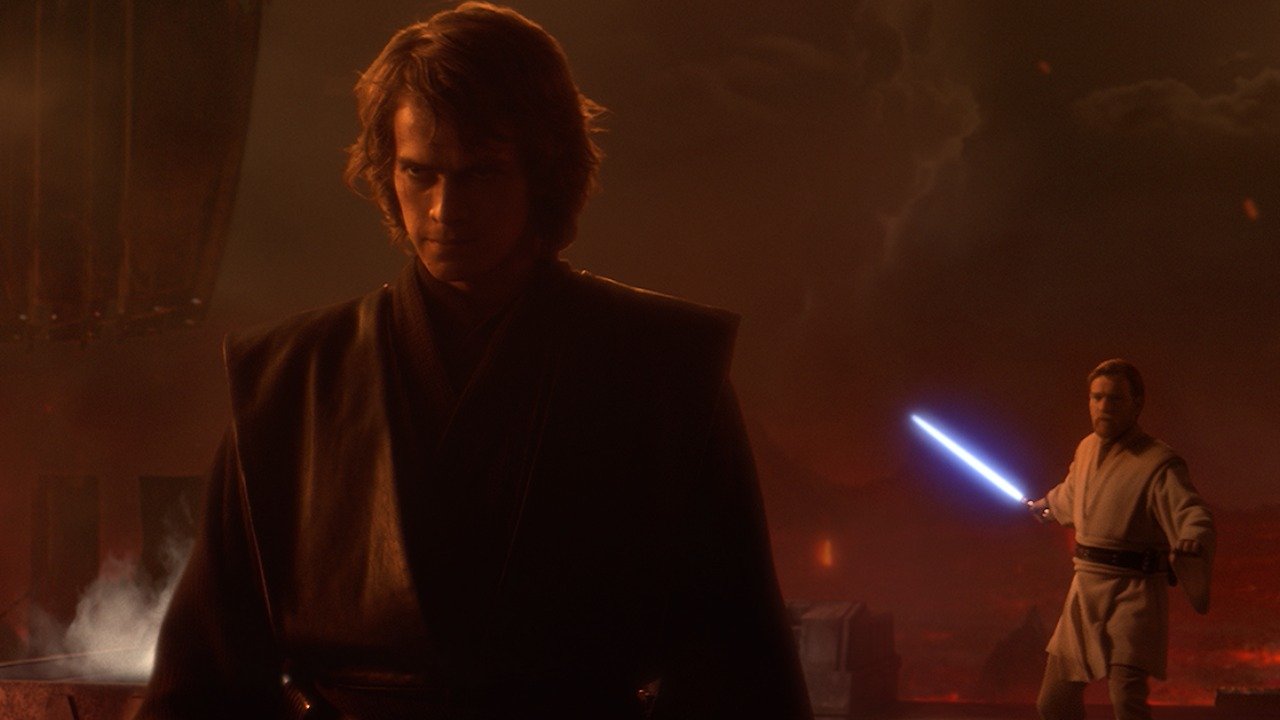


Twenty-one years have passed since George Lucas released Star Wars: Episode III – Revenge of the Sith, bringing his extraordinary six-film cinematic masterpiece to its magnificent conclusion. And after more than two decades of misguided criticism, changing cultural perceptions, and the emergence of a new generation of Star Wars fans, it’s time to acknowledge something that should have been obvious all along.
Revenge of the Sith is the greatest Star Wars movie ever made. In fact, it’s the greatest movie ever made. Period.

For decades, the conventional wisdom among Star Wars enthusiasts has been that The Empire Strikes Back represents the pinnacle of the franchise. It’s an understandable assessment. Empire is a fantastic motion picture, and I certainly regard it as the best of the original trilogy. But Revenge of the Sith possesses everything that makes Empire extraordinary and considerably more.
There is, admittedly, something paradoxical about ranking the individual installments of a saga Lucas conceived as one enormous cinematic work. And the fact that he produced the films out of chronological order makes the achievement all the more remarkable. The six installments fit together magnificently, continually echoing and rhyming with one another in ways that enrich the entire story. Taken together, they represent, in my estimation, the greatest cinematic achievement in history.
Nevertheless, comparing the individual installments remains an enjoyable tradition among Star Wars enthusiasts. And in that exercise, Revenge of the Sith stands out as the clear high point and crowning achievement.
The writing is masterfully tight and economical. The performances are magnificent. Hayden Christensen follows his iconic portrayal of Anakin Skywalker in Attack of the Clones with brooding intensity, expressive facial acting, and remarkable physicality. Ewan McGregor delivers Shakespearean-level drama as Obi-Wan Kenobi, Natalie Portman brings tremendous emotional depth to Padmé Amidala, and Ian McDiarmid gives a masterful performance as Palpatine, bringing together the many dimensions of his character with sinister precision. John Williams’s extraordinary score, the breathtaking action, and the visual storytelling combine to produce a motion picture of almost unimaginable artistic sophistication.
To be fair, Revenge of the Sith was the best-received of the prequels. Even critics who had spent years disparaging George Lucas’s return to Star Wars generally acknowledged that his concluding installment was a good movie, although still not quite on the level of the high points of the original trilogy.
But that assessment, however comparatively generous, still missed the magnitude of Lucas’s accomplishment. Revenge of the Sith isn’t merely a good Star Wars movie or even a great science-fiction movie. It’s a magnificent motion picture by any conceivable standard. It doesn’t simply belong alongside the original trilogy. It surpasses it.
Indeed, the disparity between critical perception and artistic achievement is arguably even greater with Attack of the Clones, a completely fantastic motion picture that stands alongside The Empire Strikes Back as one of the great middle acts in cinematic storytelling. But Revenge of the Sith, as the dramatic culmination of Lucas’s six-film composition, occupies a category of its own.
And frankly, the Academy’s failure to adequately recognize Revenge of the Sith as a Best Picture contender remains a black eye to the institution. That neither the film nor George Lucas’s direction received serious recognition during the 2005 film awards season is astonishing. Particularly when, just two years earlier, the Academy showered Peter Jackson’s The Lord of the Rings: The Return of the King with 11 Oscars. With all due respect to Jackson’s achievement, as a work of cinema, The Return of the King simply does not belong in the same conversation as a masterpiece of the magnitude of Revenge of the Sith. Yet one was celebrated as a landmark cinematic accomplishment, while the other was largely overlooked.
Lucas didn’t lose his way when he returned to Star Wars. He completed his masterpiece.
Yet for years, a particularly obnoxious segment of the critical establishment insisted that the man who revolutionized filmmaking had somehow forgotten how to write, direct, or tell a compelling story. We endured endless complaints about dialogue, acting, and computer-generated imagery, often from people who appeared incapable of appreciating the classical dramatic traditions, mythological structure, and sophisticated visual storytelling that informed Lucas’s work.
The backlash became particularly pronounced during the early internet era, when elaborate video essays attacking the prequels helped transform fashionable contempt into something resembling an intellectual orthodoxy. Mike Stoklasa’s fictional Harry Plinkett persona became perhaps the most recognizable example. These productions, celebrated by some as sophisticated film criticism, helped popularize a culture in which sneering mockery and performative disdain were mistaken for genuine artistic insight.
And there was something especially obnoxious about older fans insisting that the Star Wars movies enjoyed by a younger generation were somehow unworthy of the franchise. Apparently, the films they experienced as children had to remain the definitive standard against which everything else would be measured. It’s the sort of cringe boomer take that has aged extraordinarily poorly.
Of course, Lucas was doing something considerably more ambitious than recreating the experience of seeing Star Wars in 1977. He was expanding his mythology, exploring increasingly sophisticated dramatic and philosophical material, and revolutionizing the technological possibilities of cinema in the process.
Then Disney came along and delivered its steaming pile of garbage in the form of a sequel trilogy.
Suddenly, the distinction between a visionary filmmaker constructing a coherent artistic composition and a corporate enterprise attempting to reproduce the superficial characteristics of Star Wars became painfully apparent. But the prequels don’t deserve recognition merely because Disney subsequently demonstrated what genuinely bad Star Wars movies look like. They deserve recognition because they were extraordinary works of art from the moment they were released.
And increasingly, the younger generation already gets it.
For years, I’ve enjoyed asking people wearing Star Wars clothing or carrying some piece of franchise memorabilia a simple question: What’s your favorite Star Wars movie? Increasingly, particularly among younger fans, the answer is Revenge of the Sith.
These are people who grew up experiencing the complete saga without necessarily absorbing the prejudices of the critical establishment that dominated the conversation during the prequel era. They weren’t conditioned by the absurd critical assertions that Hayden Christensen’s iconic coming-of-age performance in Attack of the Clones was somehow cringe, or that George Lucas, in the midst of one of cinema’s greatest creative achievements, was somehow ruining his own creation. They grew up experiencing the complete saga on its own terms and recognized that the only things truly cringe were the critics’ preposterous assertions.
The enthusiastic reception to the film’s twentieth-anniversary theatrical rerelease in 2025, the resurgence of appreciation for Christensen, and the broader cultural embrace of the prequel era illustrate how dramatically the conversation has changed.
Also Read: AI Agents Need an Authority Budget
For years, we’ve watched articles cautiously asking whether the prequels were secretly good, whether they were underrated, or whether perhaps they weren’t quite as terrible as everybody once claimed.
Enough already.
They weren’t secretly good. They weren’t almost masterpieces. They were masterpieces all along, and it’s time for the critical class to catch up with the generation that increasingly recognizes what was there from the beginning.
Revenge of the Sith didn’t need twenty-one years to become a masterpiece. It was a masterpiece in 2005. It remains one today.
It’s time to admit the truth: Revenge of the Sith is the greatest Star Wars movie ever made. In fact, it’s the GOAT of all movies. And it’s not even close.