An act of autonomy kicks off the entire plot of Buddy [2026]. The eponymous character is a narcissist who loses all pretense of affection or humanity when disobeyed; this well-trodden territory, which is nonetheless worth establishing, becomes an amazing device to explore the reality of childhood trauma. So often traumatized children in fiction become miniature adults. They adopt cynical worldviews. They understand everything. Grand questions are abandoned because that’s just the way things are.
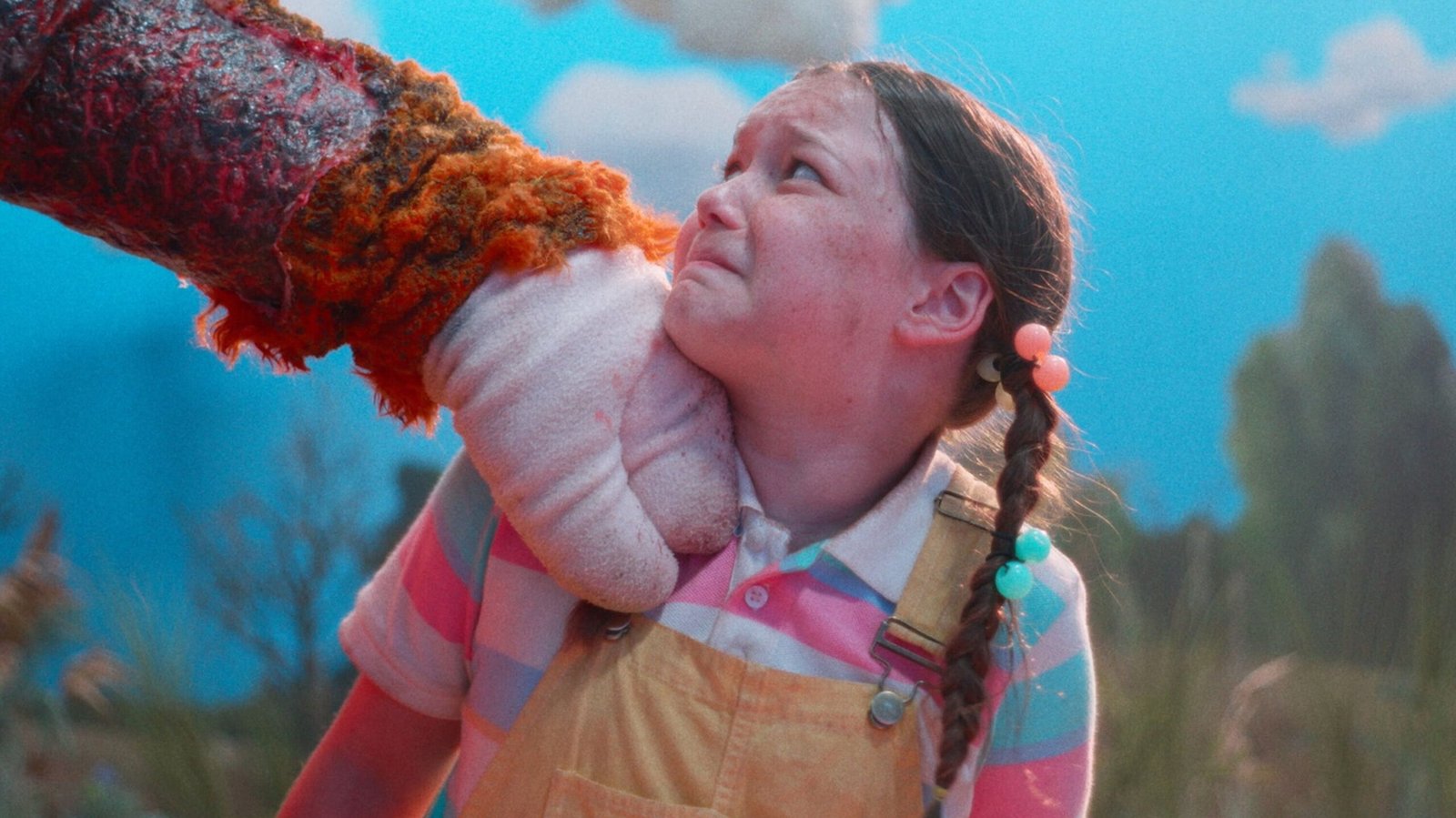
What Buddy gets gut-wrenchingly right is that children remain children even when exposed to the harshest possible scenarios. A child still asks, “Why?” They can and will accept that adults can and are harsh, cruel, and sadistic and won’t do as they wish without regard for others, but they still want to know why? Why, they ask, well past the point any adult would. Initially the other children react with abject incredulity. The idea that Buddy would murder anyone is not a concept they can comprehend yet. Once presented with incontrovertible evidence, they do not immediately find him irredeemable.
Hope remains.
Curiosity remains.
A need for there to be a reason remains.
They don’t magically develop the framework or language of an adult merely because they have been exposed to the other side of the veil; they are still firmly planted in the dimension of childhood, and like a mechanic with only a wrench and a hammer faced with a faulty transmission, they desperately try to use their available tools. A weaker film would have given them the cognitive and emotional upgrade necessary to complete their journey into pseudo-adulthood upon discovering Diamond City is a cardboard cutout. In that other worse movie, they might suddenly become bitter and cynical and be imbued with a middle-aged man’s hatred for institutions.
Instead, they invoke an “I hate you” song. Because that’s what they know. They know how to insult people. They do not suddenly know how to psychoanalyze Buddy and explain how they’re now disillusioned by his false architecture of authority standing on a foundation of coercion. Buddy still remains the only authority they know. The only figure who can provide escape or relief. They still implicitly trust him even knowing the consequences. This is where Buddy particularly nails so-called loss of childhood innocence: not only is it a gradient—not a black-and-white cliff one falls off—but children have limitations. Their growth may be accelerated, it may be hindered, or it may have one catalyst that can later be pointed at as the beginning of traits they later possess in adulthood. Even after facing a revelation that would have broken the mind of an adult, they aren’t thinking in systems and existentialism. They’re thinking, How the hell do we beat Buddy and get home?
One child is coaxed by Buddy, promising his death will be painless. There is still a bond there. A relationship to authority itself that has not yet been quashed. The child trusts Buddy because even when he sees the atrocities he is capable of, the child must necessarily believe Buddy will still be honest about further cruelty. This is how the traumatized mind of a child adapts, and I would know. There were many nights I conjured up empathy for the people who in so many ways deeply scarred me.
Even after Buddy is defeated, the final child left standing does not display a newfound cold disposition. She’s actively bonding with the backpack and mailbox, who aided her survival. She’s still grounded in childish ideals. This makes the reversal when she transitions back to the real world, outside of Buddy’s pocket dimension, even crueler.
The backpack and mailbox are simply that. Inanimate objects. Crucially, she reacts as a child would. She cries. She does not immediately understand this is the natural consequence or accept that she is alone in this world. She bawls her eyes out because through it all, she is a scared, helpless child who now sees the world as it is without any greater capacity for navigating it. She is stuck at sea in a raft, years away from possessing a proper seafaring vessel that will itself have holes in it. Patches only extensive therapy can hope to mitigate. While an aspect of her innocence has been taken from her, she is still a child.
A child left to wait for her mental and emotional capacity and framework to catch up with all she has experienced. Buddy understands this. What we are all left with is the reality of childhood trauma: it doesn’t make you tougher or stronger or David, who has defeated Goliath; it leaves you scared and ill-equipped and stuck on the wrong side of a barrier you have forcibly been pulled closer to early.